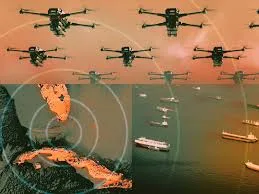
Major intelligence reports that just surfaced on May 17, 2026, regarding Cuba’s drone program.
According to classified U.S. intelligence shared with Axios, Cuban military officials have been discussing contingency plans to use attack drones against U.S. targets—specifically the naval base at Guantanamo Bay, American military vessels, and potentially Key West, Florida—should open hostilities break out between the two nations.
Here is the breakdown of what is actually happening behind the headlines:
1. The Drone Stockpile
U.S. intelligence indicates that Cuba has acquired more than 300 military drones of varying capabilities from Russia and Iran since 2023. This procurement has reportedly ramped up over the past month. Iranian military advisers have also been spotted in Havana, helping Cuban intelligence study how Iran has historically resisted U.S. pressure.
2. Is an Attack Imminent?
No. U.S. intelligence officials have explicitly stated they do not believe Cuba is an imminent threat or actively planning an unprovoked strike. Instead, the intercepted communications show that Cuban leadership is discussing these drone warfare tactics as a defensive strategy in the event that the U.S. launches a military offensive against the island.
3. The Tense Geopolitical Backdrop
Relations between Washington and Havana are at their most volatile point in decades following the U.S. military operation that ousted Venezuelan leader Nicolás Maduro in January. Since then, the Trump administration has placed a strict fuel blockade on Cuba, choking off its economy and causing near-total blackouts across the island.
President Trump has publicly mused about “taking over” Cuba next, signaling to the Castro regime that military intervention is a real possibility.
4. Cuba’s Reaction
Following the leak of the drone report, Cuban President Miguel Díaz-Canel issued a statement on X (formerly Twitter) asserting that Cuba “poses no threat” and has no aggressive intentions against the U.S. However, he fiercely defended Cuba’s “absolute and legitimate right to defend itself against a military onslaught,” warning that any U.S. attack would trigger a “bloodbath with incalculable consequences.”
What Happens Next?
The disclosure of the drone threat appears to be part of a coordinated effort by the U.S. administration to ramp up pressure on Havana. On May 14, CIA Director John Ratcliffe made a rare, abrupt visit to Havana to deliver a warning that Cuba can no longer act as a platform for foreign adversaries like Russia and China (both of whom operate high-tech intelligence-gathering facilities on the island).
Furthermore, the U.S. Department of Justice is expected to unseal an indictment against 94-year-old Raúl Castro later this week for his role in the 1996 shootdown of the Brothers to the Rescue planes, which will likely be paired with a harsh new wave of economic sanctions.