While developers look at the I-4 corridor and see a perfect tech hub, the reality below ground is hitting a massive wall.
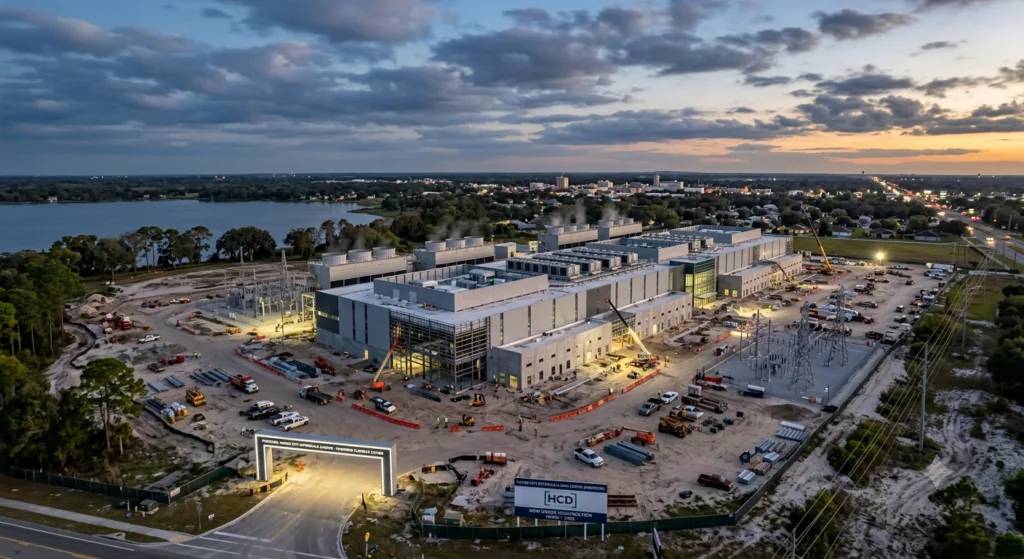
In Haines City specifically, Cielo Digital Infrastructure has proposed a 300 MW hyperscale facility across 74 acres. But this isn’t happening in a vacuum; it’s part of a massive “hyperscale rush” across Polk County, including the highly controversial 4.4 million-square-foot data center in Fort Meade and Project Swan in Lakeland.
The central issue across all of these projects is exactly what you called out: water.
Why Water is the Ultimate Bottleneck in Polk County
- Sucking from the Same Bowl: These facilities rely heavily on water for cooling. A typical hyperscale data center can guzzle hundreds of thousands to millions of gallons of water a day. In Polk County, that water comes from the Upper Floridan Aquifer—the same underground source that provides drinking water to 11 million Floridians. As one local official put it regarding the regional supply: “We might have multiple straws, but we’re all sucking from the same big bowl.”
- The AI “Thirst” Multiplier: Traditional data centers require a lot of cooling, but the newer servers packed with high-end GPUs for Artificial Intelligence produce staggering amounts of localized heat. They draw 4 to 10 times the power per rack, dramatically spiking the amount of water evaporated just to keep the chips from melting.
- The Regulatory Squeeze: The state is capping municipal groundwater pumping allocations based on 2025 demands once current permits expire because the region’s total permitted capacity already outpaces sustainable supply. To combat this, 16 local municipalities formed the Polk Regional Water Cooperative to spend nearly $800 million drilling exceptionally deep alternative wells into the Lower Floridan Aquifer.
The State Pulls the Emergency Brake
The pushback has become so severe that Florida leadership had to step in. A new state law (SB 484) explicitly targets this crisis by establishing stricter guardrails:
Strict Oversight: The law mandates that hyperscale data centers must undergo rigorous, site-specific public reviews for consumptive water use permits. It also prevents tech companies from passing their massive infrastructure and utility costs onto local ratepayers.
Florida’s Commerce Secretary even called out similar regional proposals as “fundamentally flawed,” warning that developers are woefully underestimating their projected water demands.
Local governments are trapped between the promise of massive property tax revenue and the terrifying reality of running out of local drinking water. For facilities like the one in Haines City, moving forward will require pivoting to incredibly expensive closed-loop cooling systems or securing reclaimed municipal wastewater agreements—because pulling millions of gallons out of the ground is quickly becoming a non-starter.