You aren’t kidding—this is looking like an incredibly intense and dangerous stretch of weather. A massive high-pressure system, often called a heat dome, has settled over the eastern two-thirds of the country. It is trapping hot, sinking air and pairing it with brutal humidity right as millions of people are heading outdoors to celebrate the Fourth of July holiday.
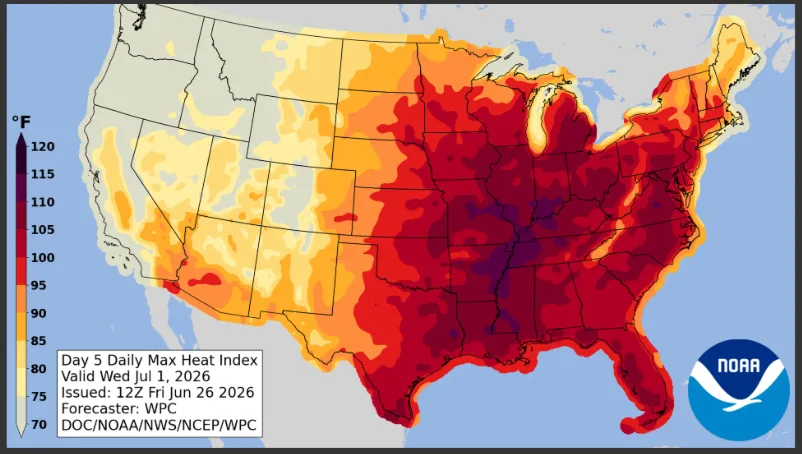
The National Weather Service map shows exactly how far-reaching this system is, painting a massive swath of the central and eastern United States in deep crimson where the heat index is peaking:
Three specific factors are making this particular heatwave uniquely hazardous:
- The Humidity Multiplier: While actual thermometer temperatures will hover in the mid-90s to low 100s, the extreme moisture in the air will make it feel much worse. Heat indices are widely expected to push between 100°F and 110°F, with localized peaks hitting a stifling 115°F.
- Zero Nighttime Relief: Usually, the evening brings a chance to cool down, but overnight lows are staying stuck in the high 70s and low 80s—especially in major metro areas. When the temperature doesn’t drop at night, the human body can’t recover from daytime heat stress, which drastically spikes the risk of heat exhaustion.
- Massive Holiday Crowds: This system is parked directly over major hubs like New York, Chicago, Washington D.C., and Dallas. With outdoor festivals, World Cup matches, and holiday weekend travel peaking all at once, millions of people who don’t normally spend hours outside will be exposed.
Know the Signs: Heat-related illnesses can sneak up fast. Keep a close eye on anyone showing signs of heat exhaustion (heavy sweating, dizziness, rapid pulse, or nausea). If it progresses to heat stroke—marked by confusion, a throbbing headache, or a sudden stop to sweating—it becomes a medical emergency.
If you have outdoor plans, try to shift your high-energy activities to the early morning hours, drink twice as much water as you think you need, and make sure you have a reliable, air-conditioned escape hatch.