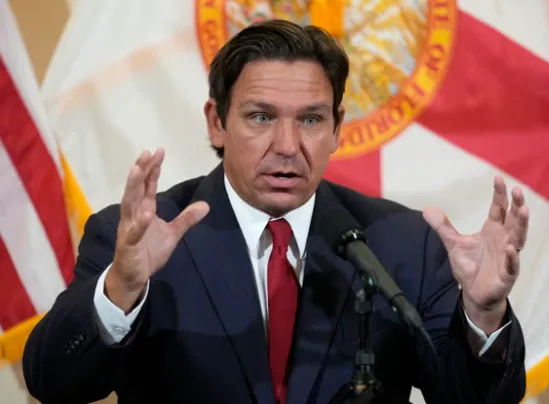
Florida Governor Ron DeSantis signed the state’s $117.6 billion budget for the 2026–2027 fiscal year, marking the eighth and final spending plan of his tenure.
While initial headlines highlighted a $1.6 billion total reduction, the final veto list reflects a combination of project cuts and blocked fund transfers. Specifically, DeSantis issued $810 million in direct line-item vetoes alongside a $750 million vetoed transfer that lawmakers had attempted to move into the state’s rainy-day fund.
The signed budget marks the fourth consecutive year of declining overall state spending in Florida.
Major Vetoes & Cuts
DeSantis noted during his press conference that he focused on cutting “nice to have” items rather than essentials, targeting specific policy tie-ins and local projects:
- Sovereign Immunity Expansion: In a high-profile move, DeSantis vetoed a bill that would have raised the caps on how much money local governments and the state pay out in negligence lawsuits (which would have increased individual caps from $200,000 to $350,000). He argued the expansion would incentivize “frivolous lawsuits.”
- Correctional Officer Raises: He axed $91.5 million meant for correctional officer salary increases, not because he opposed the raises, but because lawmakers tied the funding to a mandate to build a new prison. DeSantis labeled the move a “D.C. swamp game” that would generate unneeded state debt.
- Elder Care Expansion: The budget slashed more than $30.6 million intended for the Program of All-Inclusive Care for the Elderly (PACE), blocking hundreds of planned new elder care slots across counties like Pinellas.
- Rainy-Day Fund Transfer: He blocked a $750 million transfer to the state’s Budget Stabilization Fund. Because Florida’s rainy-day fund is already maxed out at its current constitutional limit of $5 billion, DeSantis rejected adding more before a proposed constitutional cap increase is officially enacted.
- Cultural & Local Infrastructure Grants: He slashed $3 million in Culture Builds Florida grants and rejected various local stormwater, road improvement, and animal welfare facility projects.
What Remained: Budget Highlights
Despite the heavy veto pen, several key priority areas received historic funding levels:
- K-12 Education: A record $30 billion allocated for public schools, which pushes per-student spending to an all-time high of $9,338. This includes $1.56 billion specifically earmarked for teacher salary increases.
- Environmental Restoration: $1.2 billion dedicated to Everglades restoration and water quality protection, helping to keep the state-funded portion of the Everglades Agricultural Area (EAA) Reservoir project ahead of schedule.
- Tax Holidays & Relief: The budget locks in a permanent Back-to-School tax holiday, a second consecutive “Second Amendment” tax holiday (exempting firearms, ammunition, and camping gear from September through December 2026), and a sales tax refund of up to $500 for homeowners installing impact-resistant windows and doors.