That quote speaks right to the heart of the intense debate playing out at City Hall right now.
Today (July 6, 2026), the Lakeland City Commission held its first official public discussion and hearing on a proposed 12-month temporary moratorium on new large-scale data centers and “large-load” electric customers (facilities using more than 50 megawatts a month).
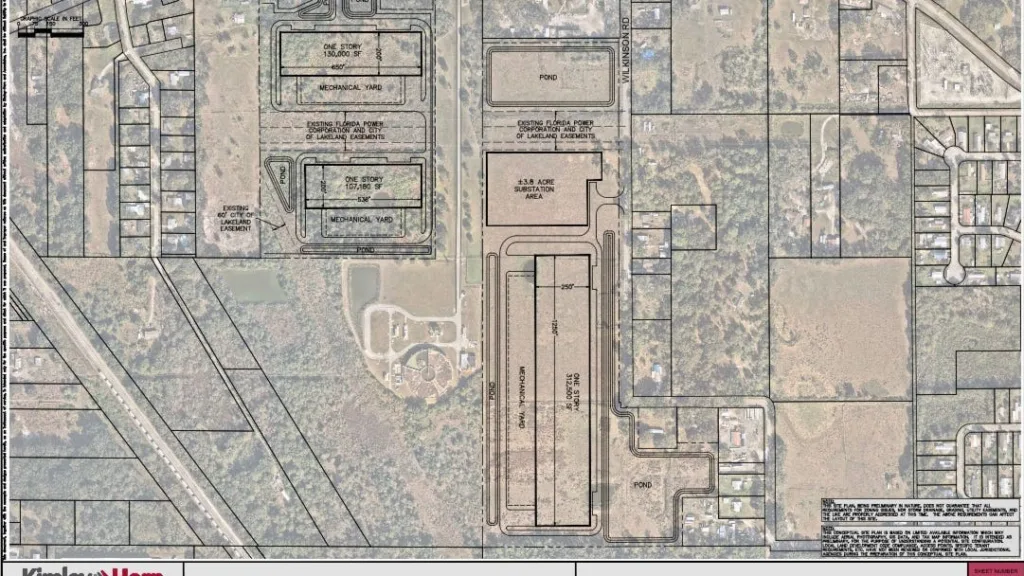
The push for a strategic pause comes directly after heavy community pushback against Project Swan, a massive 600,000-square-foot hyperscale AI data center campus planned near Old Tampa Highway and Wilkinson Road in West Lakeland.
Here is where things currently stand with the city and the developers:
The Developer’s Stance: “We Want to be a Partner”
Faced with intense community-organized opposition—which recently led the developer to withdraw from a key development review meeting in June—the firms behind these projects are shifting their public messaging. By expressing a desire to “be a partner,” developers are attempting to reassure local leaders and residents that they can mitigate the massive infrastructure footprint these facilities bring. Proponents often point to potential long-term tax revenues and corporate promises to fund local nature parks or green spaces as a tradeoff.
Why Lakeland is Pushing for a 12-Month Pause
Despite the developer’s cooperative tone, Lakeland officials and residents are deeply skeptical, primarily because the city’s current rules weren’t built for the AI boom.
- Utility & Resource Strain: A primary concern is the sheer volume of power and fresh water these facilities require for cooling, especially given that the region is currently navigating a Phase 3 water shortage.
- Zoning Ambiguity: Executive planners recently noted that Lakeland’s Land Development Code does not explicitly list data centers as a permitted use, meaning they are technically prohibited until city rules are updated.
- Low Job Creation: Unlike traditional industrial or business parks, a 600,000-square-foot data center requires very few full-time employees once built, offering little job growth relative to its massive environmental and noise impact.
What Happens Next?
The 12-month freeze is designed to preserve the status quo so city staff can thoroughly research noise impacts, environmental footprints, and whether developers should be forced to entirely pay for the infrastructure upgrades they require.
The first public hearing concluded today, but the final decision isn’t set in stone yet. The second public hearing and the final vote on the 12-month moratorium ordinance are scheduled for July 20, 2026, at 9:00 a.m. at City Hall.