Polk County’s rich history in early 20th-century phosphate mining and logging created a series of company-owned mining settlements in the “Bone Valley” region. When commuting became easier in the 1950s and 1960s, these dedicated towns were disbanded or abandoned, creating several ghost towns just south of Lakeland:
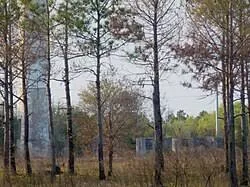
1. Brewster (~20 miles south of Lakeland)
- History: Founded in 1910 by the American Cyanamid Company, Brewster was once a bustling phosphate mining town complete with its own schools, movie theater, medical clinic, post office, and rail yards. It reached a population of around 800 before the town was officially closed and demolished by the company in 1962.
- What Remains Today: While most of the original town was torn down, the prominent Brewster Power Plant smokestack still stands along Old Highway 37 south of Mulberry, along with a few overgrown concrete pad ruins and nearby rail tracks.
- Note: The surrounding land is owned by the Mosaic Company.
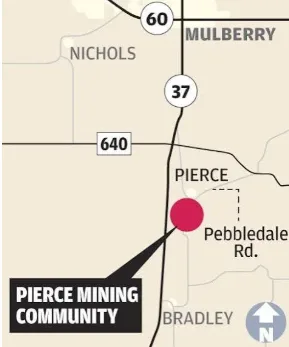
2. Pierce (~15 miles south of Lakeland)
- History: Built in 1906 by the Pierce Phosphate Company (later American Agricultural Chemical Co.), Pierce grew to be one of the largest company towns in the area, housing over 1,000 residents at its peak. It featured housing, a hospital, commissary, churches, and processing plants. The town was disbanded in the mid-1950s as workers began commuting from larger neighboring towns.
- What Remains Today: The town structures were dismantled, but the area is marked by an official Polk County Historical Marker along Old State Road 37 N, just south of Pebbledale Road.
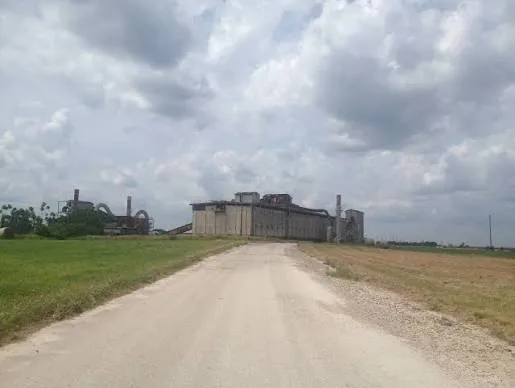
3. Nichols (~12 miles south of Lakeland)
- History: Established around 1905 near Mulberry, Nichols was a self-contained community of about 120 houses, a general store, schoolhouse, and medical center built to support the nearby phosphate draglines and beneficiation plants.
- What Remains Today: Residential housing was phased out in 1960. While a small rural community and active post office remain along Nichols Road, much of the historic industrial mining plant and adjacent company sites were abandoned in the late 1990s and early 2000s.
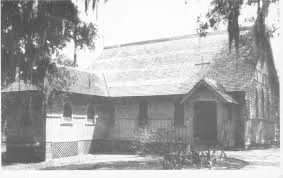
4. Acton (~3–4 miles east of Lakeland)
- History: Located near present-day Eaton Park, Acton was platted in 1884 as a boomtown on the South Florida Railroad line. It briefly thrived with a hotel, post office, store, and church, serving as a rival town to early Lakeland. However, after the hotel burned down in 1889 and the railroad bypass shifted focus toward Lakeland, the population rapidly relocated.
- What Remains Today: Very little remains above ground; the area was absorbed by expanding Lakeland suburbs and Eaton Park.
Other Historical Mining Ghost Towns in Polk County
- Agricola & Pembroke: Small phosphate mining settlements south of Bartow that vanished mid-century after operations ceased and homes were moved or demolished.
- Sumica & Fort Kissimmee (Eastern Polk): Located further east toward the Kissimmee River, Sumica was a 1920s turpentine and logging town. The land is now part of the Sumica Wildlife Management Area, featuring scenic trails with small structural remnants and informational signage.
Tips for Exploring
- Safety & Property Rights: Many former phosphate sites in Bone Valley are private industrial property owned by mining companies (such as Mosaic) or protected state lands. Trespassing on active or abandoned heavy-industrial sites can be unsafe.
- Local History Museum: To see artifacts, photographs, and fossils from Brewster, Pierce, and the Bone Valley boomtowns, visit the Mulberry Phosphate Museum in nearby Mulberry.
(Visited 685 times, 1 visits today)