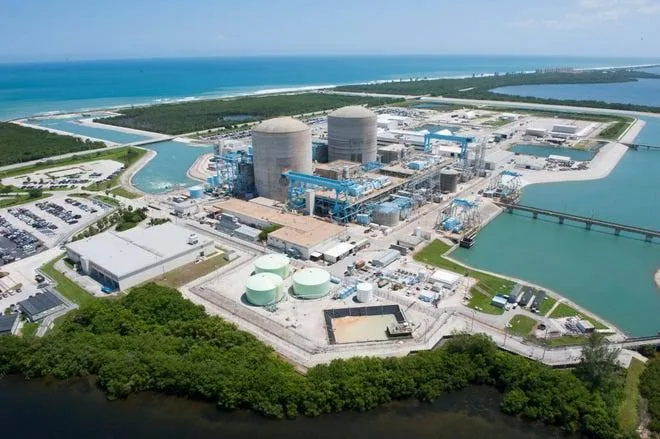
On August 13, 2026, Unit 1 of the St. Lucie Power Plant on Hutchinson Island, Florida, was manually shut down after three control rods unexpectedly dropped into the reactor core.
Key Details of the Event
- What Happened: At 9:47 a.m. EDT, Unit 1 was operating at 100% power when three control rods (part of the Control Element Assemblies) fell into the core due to an equipment/control fault.
- Operator Action: Under standard safety protocols, dropping multiple control rods alters the reactor’s core dynamics. Plant operators with Florida Power & Light (FPL) executed a manual reactor trip (scram) to safely halt the fission reaction.
- Current Status:
- The trip was uncomplicated, and all safety systems responded normally.
- Operators stabilized the reactor in Mode 3 (Hot Standby), with decay heat safely being removed via steam discharge to the main condenser.
- Unit 2 was completely unaffected and continued running normally.
- The Nuclear Regulatory Commission (NRC) Resident Inspector was notified via standard 4-hour non-emergency reporting procedures.
Why Control Rods Matter
Control rods absorb neutrons inside a reactor. Inserting them slows or stops the nuclear chain reaction.
While a single dropped rod can often be managed by reducing turbine output, multiple dropped rods require an immediate shutdown to prevent uneven power distribution and localized overheating in the fuel assemblies. Gravity-assisted dropping is a fail-safe mechanism designed into commercial pressurized water reactors so that if power to the drive mechanisms is lost or faulted, the rods default to falling safely into the core.
(Visited 455 times, 1 visits today)