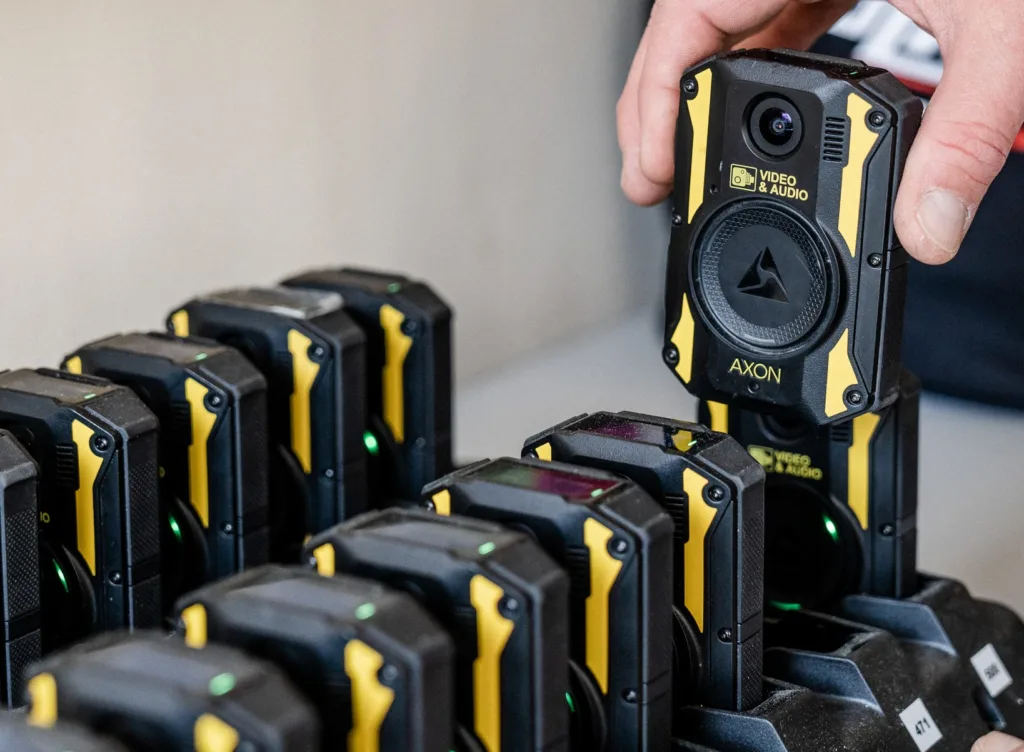
The Lakeland City Commission approved a 10-year, $21.9 million technology contract with law enforcement tech company Axon Enterprises. A key component of the package is Draft One, an AI-powered software tool designed to automatically draft police incident reports using audio captured from officers’ body-worn cameras.
Key Details of the Contract
- Scope & Cost: The $21.9 million deal spans 10 years and includes upgraded body cameras, in-car video, Tasers, real-time translation software (supporting over 50 languages), Axon Air drones, and the Draft One AI reporting suite.
- Funding: The city plans to offset a significant portion of the cost through state and federal grants, including $3.97 million from the Florida Department of Law Enforcement and $855,000 from Homeland Security, alongside a pending U.S. Department of Justice grant.
- Intended Impact: Department leadership projects that the software will generate up to 70% of initial narrative drafts and cut report completion time by 30% to 50%, freeing up officers for active street patrols.
How Draft One Works
- Audio Analysis: The software listens to recorded conversations from an officer’s body camera audio feed.
- Draft Generation: It uses natural language processing to produce a baseline narrative of the interaction or incident.
- Human Review: Officers are required to review, edit, and certify the generated text for accuracy before submitting the report into the official record.
Main Points of Controversy
Critics, civil liberties groups (including the ACLU), and legal advocates have raised several concerns:
- Lack of Transparency: Axon’s software design does not retain the original AI-generated draft. Because Florida law does not require police to disclose which portions of a report were generated by AI, defense attorneys argue it creates audit and transparency hurdles.
- Risk of Hallucinations: Generative AI models can occasionally produce false or distorted information (“hallucinations”). Opponents argue that relying on automated drafts could compromise report accuracy or subtly influence an officer’s memory of an event.
- Courtroom Challenges: Legal experts warn that AI-assisted reports could become prime targets for cross-examination by defense counsel, potentially complicating prosecution efforts.
Department Guardrails & Response
Lakeland Police Department leadership, including Assistant Police Chief Hans Lehman, stated that safety guardrails are built into the workflow. Officers remain responsible for reviewing every draft, and supervisory staff must review and sign off on reports before final submission. Similar Axon AI report-drafting systems were adopted earlier this year by neighboring agencies, including the Tampa Police Department and the Hillsborough County Sheriff’s Office.