The Aircraft Rescue and Fire Fighting simulator allows firefighters to train for aircraft fires in a controlled setting.
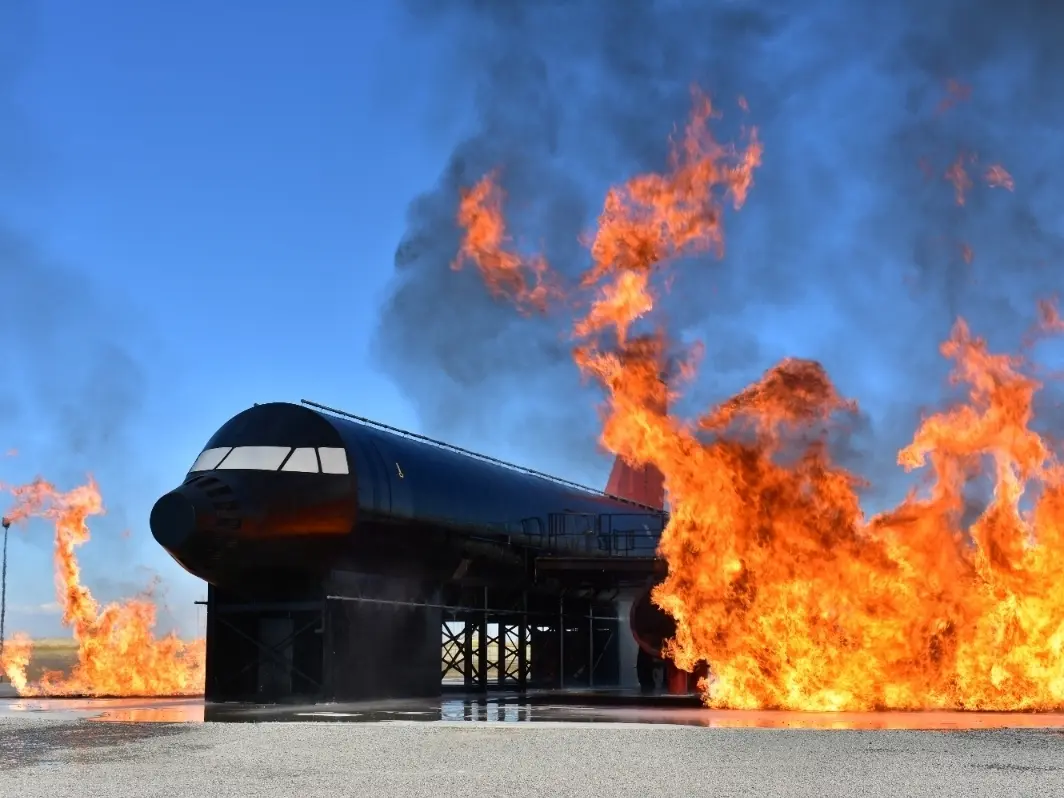
The Lakeland Fire Department was the first department to perform live-fire training at the newly constructed, $9 million Aircraft Rescue and Fire Fighting simulator at the Charlotte County Fire & EMS Training Center.
Charlotte County held a ribbon-cutting for the award-winning simulator on Nov. 29.
Lakeland firefighters trained from Dec. 6 to 8 in the simulator located in Punta Gorda. Live-fire training is performed annually to meet Federal Aviation Administration (FAA) regulations for the department’s ARFF division. The live-fire exercise simulated various emergency incidents involving fuel spills and potential emergencies in the presence of aircraft.
The ARFF simulator is a full-sized, state-of-the-art Aircraft Fire Fighting and Rescue prop, allowing crews to respond to and fight aircraft fires in a controlled environment. The state-of-the-art aircraft prop mimics the average size of aircraft occupying most airports, has a 64-foot wingspan, an 11-foot-high passenger compartment, and a 55-square-foot cockpit. There are four-door types, four engine types, and a touchscreen control system within the control room with redundant safety features.
The prop can simulate fuel spills, engine fires, brake and wheel fires, and fuselage fires. On the inside, fire scenarios include cockpit fires, forward galley and lavatory fires, waste bin fires, passenger area fires, and cargo fires. This all equals the most realistic training available at the highest level of safety possible.
The prop is fueled by an 18,000-gallon liquid fuel tank. Water used on the prop is collected, stored, and reused thanks to the on-site water reclaim structure.