Lakeland City Attorney Palmer Davis has been instructed to draft a new city ordinance aimed at limiting food sharing with the homeless in Munn Park.
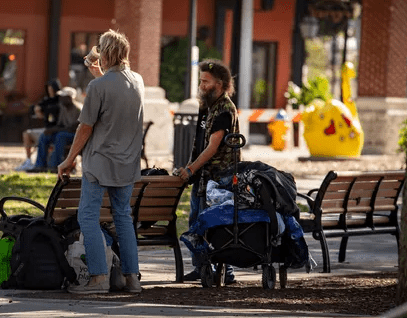
City commissioners voted unanimously to have Davis prepare a set of regulations that would create legal guidelines for groups looking to share food in the city’s parks and restrict how often it could be done. The measures are being eyed as a way to dissuade individuals who are homeless from congregating in Lakeland’s downtown parks.
“Let’s do what we’ve listened to from citizens the entire time we’ve been commissioners and start to take some formative action,” Mayor Bill Mutz said.
Editorial comment: Mr. Mayor the feedings are not the issue, it’s that the not-for-profits that are in Lakeland are all overwhelmed. Because of this economy.
Former Commissioner Phillip Walker first raised the issue of receiving complaints about religious groups bringing food to share with those in need at city parks last March.
Julie Townsend, director of Lakeland Downtown Development Authority, asked city officials to help business owners who deal with a range of issues from trash to homeless people using the shop’s alleyways as a public restroom.
Lakeland Police officers and city parks staff have reached out to these organizations to discuss why food sharing could be problematic, according to City Manager Shawn Sherrouse, citing safety and hygiene concerns.
Davis said religious and political organizations have long cited the First Amendment’s provisions guaranteeing freedom of religion and freedom of speech as protection of their right to publically share and distribute food.
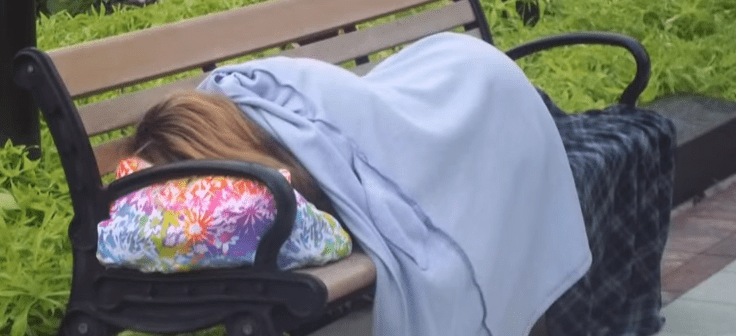
Cities across Florida have had varying degrees of success with passing laws limiting food. Fort Lauderdale’s laws were struck down as unconstitutional by the 11th Circuit Court, while the same judge upheld regulations put in place by Orlando.
In Orlando, the city passed regulations that restrict a group looking to publicly share food, likely attracting 25 or more individuals, to using any of its 42 downtown parks twice a year, according to Davis. The organization is required to file a permit in advance of a food-sharing event and obtain the city’s permission.
As an alternative, these food-sharing groups can use one of the 66 parks outside Orlando’s downtown park district. Given this allowance, the courts found Orlando’s laws did not preclude food-sharing activities, but rather protect the city’s interests in its downtown parks.
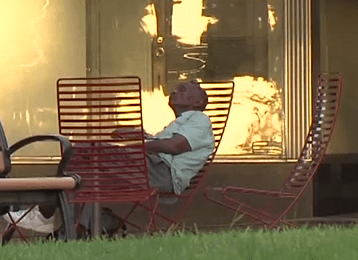
“The 11th Circuit in both these cases is not saying there’s one specific way to regulate this type of thing,” Davis said. “They are holding out the possibility you can regulate public feedings but if you do so you have to narrowly tailor your regulations and the harm you are seeking to regulate.”
Davis gave commissioners the example if they are concerned about sanitation, they could require groups handing out food to bring in portable restrooms or pay the city a fee to provide toilets.
Lakeland does require special-events permits for groups looking to assert the use of city parks for organized events like large protests, rallies, or holiday celebrations. Applications for a permit must be submitted at least 60 days in advance and vary in fee based on the site and the city’s assessment of needs.
Bob Donahay, the city’s parks and recreation director said there are no strict guidelines on what groups are told and if they need to provide portable restrooms for their events. Generally, Donahay said the city’s special events team considers how many people are expected to attend and how many hours the event will last.
Sherrouse said another challenge is determining who, if anyone, should receive a citation for showing up to share food without a permit.
“We’ve been very careful not to run into issues where we are viewed as unsympathetic to the cause by taking enforcement actions that could be seen as taking it too far,” he said.
“Has our kindness put us in a position where we are not doing anything?” Commissioner Mike Musick asked.
Former Lakeland Police Chief Ruben Garcia previously told officials the city’s laws relating to homeless issues can be difficult and time-consuming for officers to enforce. For example, Lakeland’s camping restrictions prohibit a person from sleeping outdoors on public property for extended periods of time — or longer than 30 minutes.
Davis is expected to draft legislation to provide guidelines restricting food-sharing in the city’s parks and public spaces. The measures would need to be voted on and approved by the commissioner before taking effect.
Editorial comment: The main issue is that in the late 90s, the city cleaned out and cleaned up Munn Park, it was dangerous to use the park. Now 25 plus years later the city is having the same issues the economy is bad, you have more homeless and the not-for-profit is strapped for housing and for money. It’s time to find a long-term better solution when limiting feeding the homeless in Munn Park