Polk County could be the location for a test of radioactive phosphogypsum in roadbeds if the U.S. Environmental Protection Agency approves an application from Mosaic LLC.
The Florida Legislature approved a bill authorizing the state Department of Transportation to conduct a test road that includes a road layer of phosphogypsum from the many gypstacks across Florida.
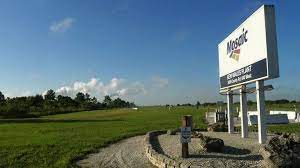
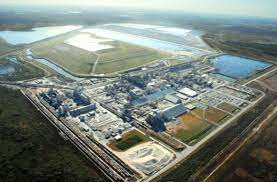
The bill took effect July 1. And pending final approval by the EPA, the first test of phosphogypsum in roads could be at the Mosaic New Wales facility in Mulberry.
The state bill was a topic of debate at the June 20 meeting of the Polk County Commission.
Winter Haven resident Fred Strickland expressed concerns about using radioactive phosphogypsum in a roadbed test, saying a former phosphate mining company had already conducted such a test, spent millions in research and could not find another useful purpose for the material.
“This material is radioactive, has a high acid content and … our elected people in Tallahassee have not done their research because this has already been done,” Strickland said.
He also said he wondered whether residents who bought homes along a phosphogypsum road would be told that the road was built with the material.
“I would never buy a home on one of these roads,” Strickland said. “Would you want this material used for your home? Would you want your children’s school parking lot to use this material.”
He said even as encapsulated roadbed, radon gas would seep through the road surfacing material as other studies have shown.
Phosphogypsum is a byproduct of the production of fertilizer from phosphate rock. It can contain uranium and radium-226, according to the EPA, which says the byproduct is more radioactive than the original phosphate rock because production of fertilizer concentrates the waste material.
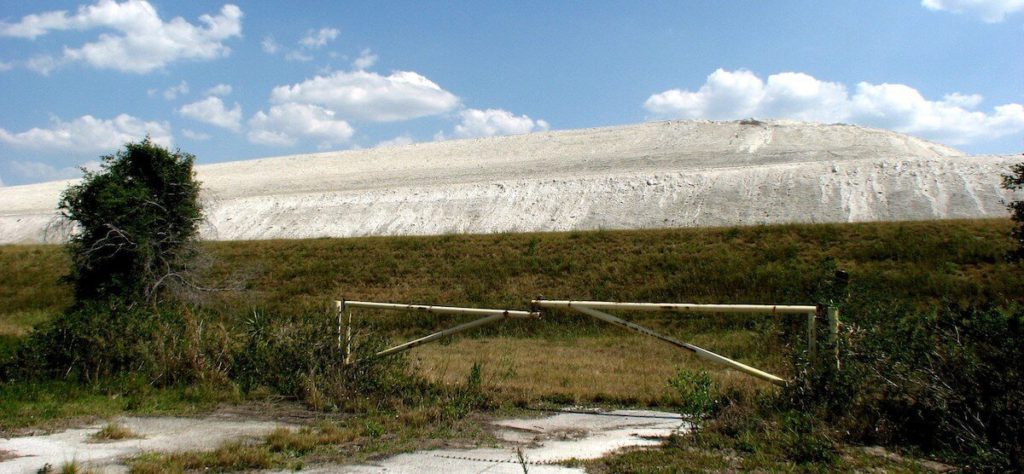
Federal and state laws currently require phosphogypsum to be placed in “gypstacks” which can rise several hundred feet across many acres.
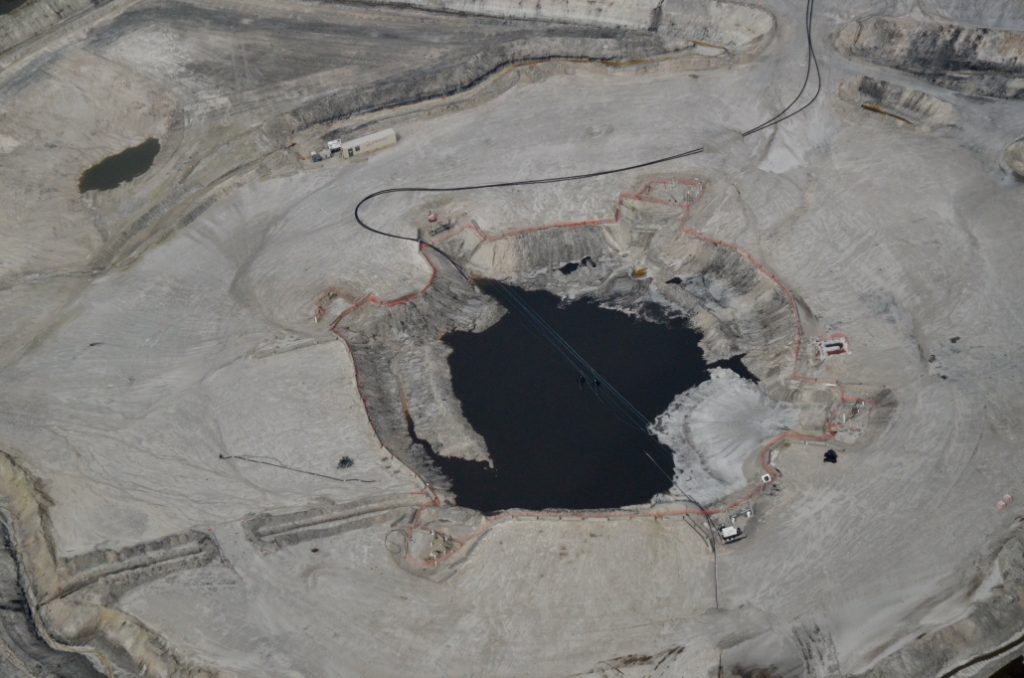
The Mosaic New Wales gypstack, which sits above the Floridan aquifer, was the site of a massive sinkhole in 2016 that resulted in water loss from the top of the stack.
‘No proof that this is gonna have a problem’
Commissioner Rick Wilson said Wednesday by phone he supports the test by Mosaic — a frequent contributor to his political campaigns. He wrote a letter in April to Gov. Ron DeSantis in support of the road building practice.
He said, there are benefits to using phosphogypsum and he worked alongside his father with the material as he grew up without any known effects to his health. He added that his father built a two-mile stretch of asphalt road with the material as roadbase on his Bartow ranch.
“None of us died,” Wilson said.
This type of road construction would save money, he said, especially at today’s prices for road building, which now relies on limestone being trucked from beyond Polk County. Its use in roadbeds would also reduce the need for “eyesore” gypstacks currently used to stack the material, as well as the environmental benefits of diverting the waste from them.
“I know there’s all kind of controversy about it, but you can find controversy in most anything that’s out there if you really want to dig deep enough,” Wilson said. “There’s no proof that this is gonna have a problem. They talk about the radon and all this.
“Can they use this in other things?” he asked. “I’m not 100% sure on that, but I damn sure know they can use it on roadbase and different things like that.”
According to Jackie Barron, public affairs manager for Mosaic, the fertilizer company is waiting for the EPA to approve its application in order to move forward with the demonstration project and test of the structural viability of the material as roadbase.
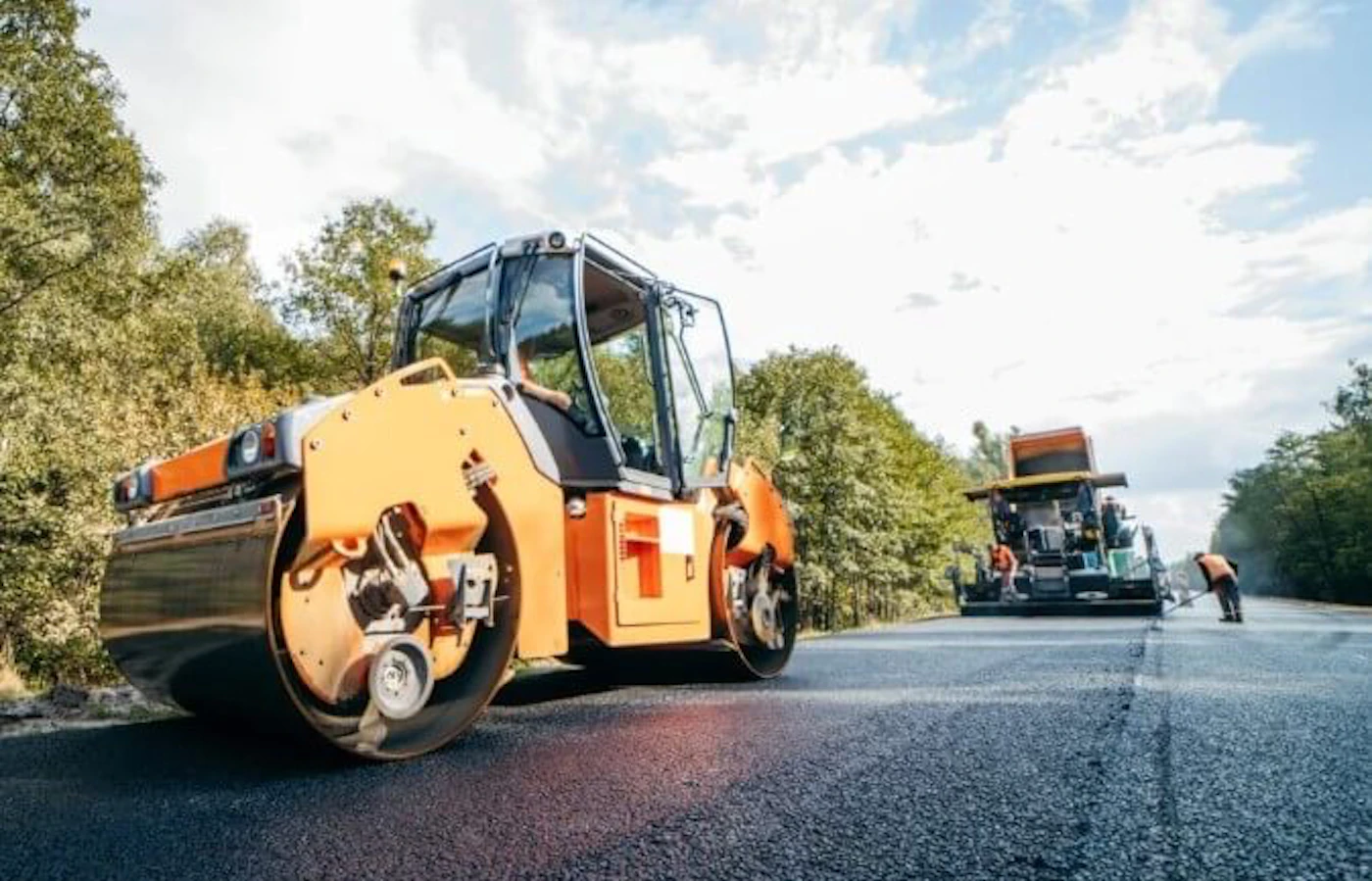
“The request is to build a modest test road to be constructed at one of our facilities” Barron said. “The test road will be made up of sand with a 10-inch base course containing up to 50% phosphogypsum. The plan is for six separate sections. The road sections shall evaluate different construction materials or serve as a control.”
“In addition, there will be three monitoring wells per section totaling 18 wells that will sample the groundwater quarterly for 18 months,” she said. “Each section shall be evaluated for performance and effects to the environment.”
The ultimate approval for proceeding with the test will rest with the EPA, Barron said.
“Federal regulations require the EPA to perform a rigorous scientific risk analysis when evaluating a request to reuse phosphogypsum beneficially,” she said. “The impacts to human health and the environment are the primary focus of that analysis.
“At the end of the day, we welcome as much testing as possible,” Barron said. “We want people to know this is a safe resource, not a waste, and we are decades behind others who long ago realized just that.”
She added that the road test would be a continuation of lab studies about four years ago at the University of Florida overseen by Timothy Townsend.
According to the campaign finance tracking group, OpenSecrets.org, Mosaic donated to the Republican and Democratic parties in Florida and several politicians representing parts of Polk County, including Melony Bell, R-Fort Meade, Jennifer Canady R-Lakeland, Sam Killebrew R-Winter Haven, and Josie Tomkow, R-Polk City.
Bell and Killebrew co-sponsored House Bill 1191, and in the state Senate, Sens. Ben Albritton, R-Wauchula, and Colleen Burton, R-Lakeland, voted in favor of SB 1258 during its passage on May 1 in the Senate.
The text of the original House version authorizes FDOT to undertake demonstration projects using phosphogypsum in road construction as an aggregate material and conduct a study on phosphogypsum as construction aggregate material.
The bill also provides that phosphogypsum used under specified circumstances is not solid waste and is allowed to be used in the state and authorizes placement of phosphogypsum in specified stack systems.
Mosaic also donated to State Attorney Ashley Moody and Gov. Ron DeSantis, who signed the bill into state law.
Still needs EPA approval
The roadbed test will still need EPA approval, an agency spokeswoman said. “EPA’s regulation of phosphogypsum under 40 CFR Part 61 is not affected by state initiatives, such as Florida’s recently passed legislation (HB 1191) on the use of phosphogypsum in road construction demonstration projects.”
The changes to the Florida laws appear to have been outlined to guide the Florida Department of Transportation, the EPA said. The Florida legislation also clearly states that any use of phosphogypsum as a construction aggregate must still comply with the conditions set forth by EPA’s regulations.
The EPA will make public the Mosaic LLC application and the technical analysis once the agency gives its pending approval. The EPA will open a public comment period at that time.
In testimony before the Transportation and Modals Subcommittee, state Rep. Lawrence McClure, R-Dover, said once phosphogypsum is encapsulated as part of a roadway below concrete or asphalt, the risks to human health are very low because the exposure to radioactivity is less than a mammogram.
During the Trump Administration, the EPA in 2020 had authorized a petition to start using the material in roadbeds. But soon after President Biden came into office, the EPA withdrew its approval citing the need for further evaluation.
In his letter to DeSantis, Wilson said Mosaic has operated in Central Florida for more than 130 years and it has had an economic impact of $3 billion and employs 3,000 people along the Interstate 4 corridor. He also wrote that supporting Mosaic was a matter of national security.
“Without Mosaic’s phosphate production, American farmers would be forced to rely on Russia and China to grow our food,” he wrote.
Where is this proposed road suppose to be constructed? We need more information.
first test of phosphogypsum in roads could be at the Mosaic New Wales facility in Mulberry