By Annie Gowen
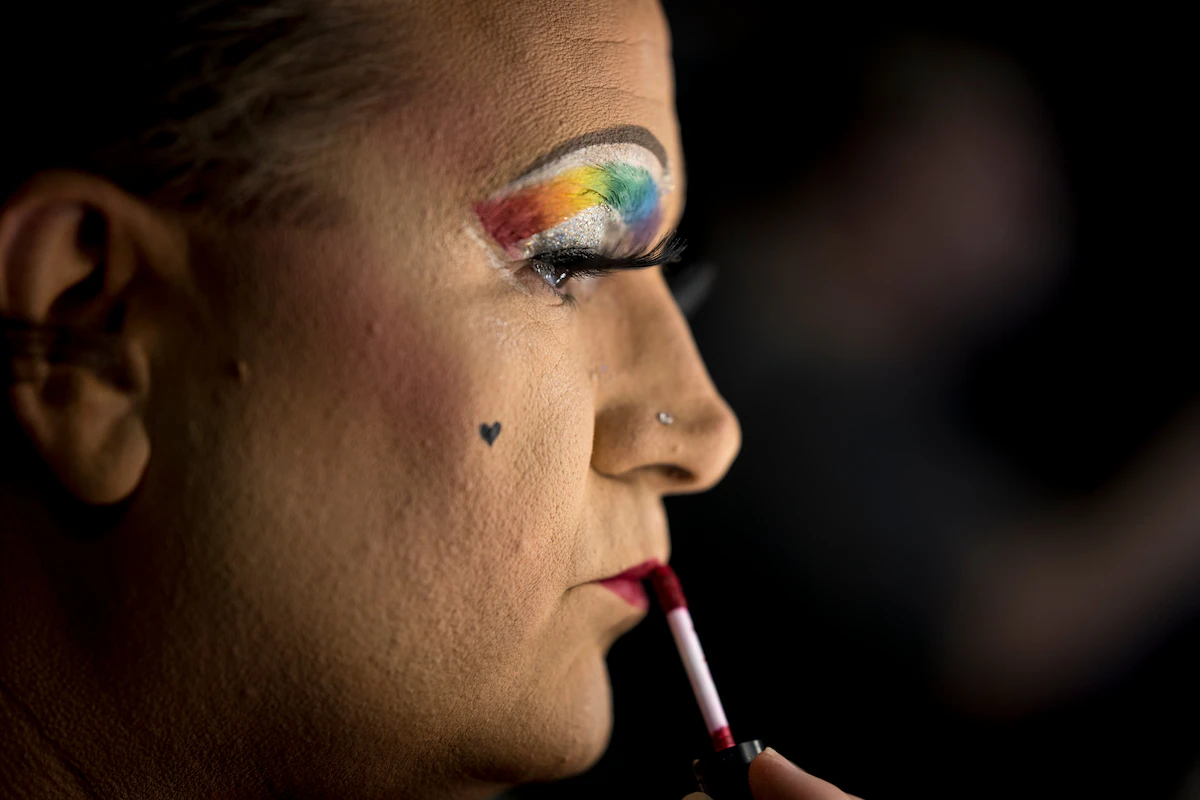
The children’s “drag queen” story hour was kept under wraps given security fears. The venue’s windows were covered in black paper. Only after Jason DeShazo arrived did he change into his outfit, and he was sure to be back in street clothes, makeup wiped clean, after the private school group’s program ended.
In a state that the gay and transgender community now considers one of the most inhospitable places in the country, the 45-year-old DeShazo, a drag performer and activist, has become a target for the far right. Neo-Nazi protesters have disrupted his shows while Christian groups have tried to shut them down entirely. He’s received online death threats.
Florida passed more anti-LGBTQ+ legislation in 2023 than in the combined seven years before, according to Human Rights Campaign, and legislators have already introduced bills for the 2024 session to prohibit the use of preferred pronouns by government agencies and to ban Pride flags and other cultural symbols from public buildings.
Republican Gov. Ron DeSantis, who made fighting back against “woke” policies that support gay rights and diversity a hallmark of his presidential bid, shows no sign of moderating his rhetoric. He has continued to showcase the state as a model for his conservative vision for the nation, even as his campaign has struggled.
“As the world goes mad, Florida represents a refugee of sanity and a citadel of normalcy,” DeSantis said in May as he signed four new laws targeting the LGBTQ+ community, including one, prohibiting minors at live performances with nudity or sexual conduct, that was quickly put on hold by the courts.
People like DeShazo, who performs as the matronly “Momma Ashley Rose,” are braced for what’s ahead. “It’s mind-boggling sometimes,” he says. “There are so many things to worry about.”
Among those things is the LGBTQ+ youth center that he’s trying to establish. During a recent bingo fundraiser in a local hippie tea shop, he joined more than a dozen parents, children, and others as a drag performer named Juno Vibranz called out the letter-number combinations. A barista mixed matcha lattes, and everyone munched on rice, chicken, and plantains from a Caribbean food truck operator parked outside.
DeShazo wants to re-create this same homey vibe in a place that would be the “safe space” he never had as a kid growing up in a conservative church and town in central Florida: “I remember being … called to the front of the church to get rid of the devil within me, feeling if I didn’t get set free, I would burn in hell. I remember sitting there scared, really scared.”
He later sought counseling with Exodus International, the now-defunct Christian ministry that tried to “convert” gay people into being straight. He says that not until he was in his early 20s and moved to live with his grandmother in Tampa was he able to break free from the church and accept himself.
The drag persona DeShazo has developed veers away from spandex and glitz. At a performance in November, he wore a dress made of strips from his great-grandmother’s quilts and sewn by his husband, Scott. He sang a plaintive song about his coming-out experience called “What If.”
Yet with an act that he describes as “the Disney Channel of drag,” he’s not surprised that he has become a target of conservatives and religious groups.
“If you Google ‘family-friendly drag queen’ or ‘drag queen and children,’” he said, “you’re probably going to find me.”
Reuther, whose drag persona goes by Mistah Aphrodite, prepares to take the stage. (Thomas Simonetti for The Washington Post)
College student Adam Reuther was among the players at bingo. He said he had found emotional harbor as a teen with the Rose Dynasty Foundation, a Lakeland-based charitable organization DeShazo launched in 2017 to support LGBTQ+ youth. One evening he was a backup dancer for a show with DeShazo’s “Momma.”
“Being there and seeing the community outpouring of all this love and support, I thought, ‘This is really something I could get used to,’ you know?’” recalled Reuther, who’s now 20 and performs in full drag, with dramatically painted eye shadow and a black-and-white wig, as harlequin character “Mistah Aphrodite.”
The game night’s admission fee brought in more than $200 for the youth center, which supporters hope will include a coffee shop and a library for banned books, Vibranz told the group.
“We might even have a pool table!” parent volunteer Alizabeth Itter piped up.
“Perfect! I love it!” said Vibranz.
Outside forces aren’t making such efforts easy. For DeShazo, that has been the case since late 2022. “The start of the war,” he says.
He was applying NYX red stain to his lips before a show — a charity event with youth and drag performers — when a Lakeland police deputy appeared backstage. Demonstrators were outside, waving Nazi flags and screaming epithets. They also projected an image on the side of the building. “Make Pedophilia Punishable by Death,” it read.
The climate in Florida, a state where drag has been a celebrated art form for more than a century, has only become more hostile to performers since then.
The gay community had hoped for an allyship with DeSantis after he took office in 2019. That June, the governor attended a memorial for the victims of a mass shooting at Pulse, the gay nightclub in Orlando, pledging that Florida “will not tolerate hatred toward the LGBTQ community and Hispanic community.”
But in 2021, DeSantis signed a law vetoing trans women from playing in female sports. The following year he approved the Parental Rights in Education bill, which prohibits classroom discussion about gender and identity. When Disney opposed it, he launched a battle to control the oversight district for Walt Disney World.
A state regulatory agency began notifying venues hosting family-friendly drag shows that they were violating the state’s decency laws and could lose their liquor licenses. Three venues — two in Miami and one in Orlando — ultimately settled with the state for hefty fines.