Mail-in ballot will arrive shortly; maybe yours did, already. (And if you still want one, you have until Oct. 24 to request it .)
Even for someone like me, who likes to think herself well-informed and educated about the upcoming election, the four pages of small print looked a bit daunting.

Sure, most of us have known our presidential preference for months, if not longer; maybe also our choices for some of the more publicized local races, like the hospital board contest or your district’s commissioner.
And no doubt you’re aware that, among the six proposed state constitutional amendments on the ballot, one is about abortion and another about marijuana. But do you really know what they’re asking?
While the state Supreme Court has gone over these referendums with a fine-toothed comb to eradicate loopholes or vagaries, in the process, they often make the language so dense that it can make a voter feel . . well . . . dense.
There’s nothing worse than that sinking feeling you get when you realize, after you have voted, that you’ve misinterpreted the verbiage and inadvertently cast a “No” vote when you meant to vote “Yes” – or vice versa.
When readers occasionally compliment me on making a complex issue understandable, I often joke that I have to dumb things down (while fervently working not to add in any mistakes) so that I myself can understand them.
Actually, it’s no joke.
Whoever started the “The Complete Idiot’s Guide to . . .” series was one entrepreneurial step ahead of me.
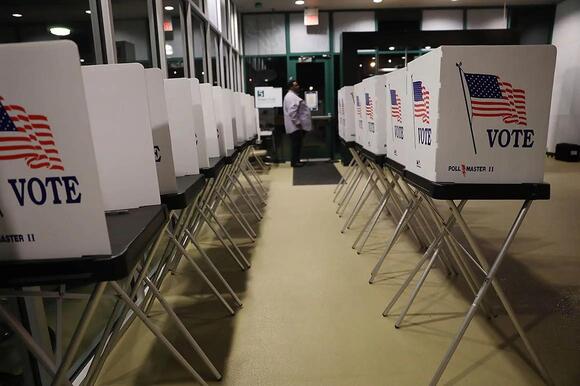
So with apologies to those who have no need for simplification, I herewith offer my “Guide to the Florida Amendments for Dummies.” You’re welcome.
#1: Florida school board elections are currently non-partisan (ostensibly anyway). This amendment would require candidates to run under a specific party affiliation.
Pros/Cons : Supporters say it would provide voters with more information and increase “transparency.” Opponents say politics have no place in school board elections and that, in a closed primary state like Florida, it could rob thousands (including anyone not affiliated with a party) of the opportunity to vote.
What Your Vote Means : YES: Political parties could nominate their own candidates and their affiliations would be noted on the ballot. NO: The status quo would be maintained and candidates would not run for school boards with any party designation.
#2: Floridians already have the right, protected by state law and the state Constitution, to hunt and fish. This amendment would more formally enshrine that right in the Constitution and make hunting and fishing the “preferred means” for wildlife management.
Pros/Cons: Supporters says hunting and fishing play an important role in the traditions and economic of the state and should be formalized as an individual right. Opponents say the amendment would make it harder for the state to enact conservation methods to protect threatened species.
What Your Vote Means: YES: Would make it harder for legislators to create any laws that would ban or restrict various forms of hunting or fishing. NO: Would make it easier for the state to place restrictions on hunting and fishing to conserve select wildlife species or areas.
#3 Florida currently permits medical, but not recreational, use of marijuana with a doctor’s recommendation. This amendment would allow adults 21 or older to possess, purchase or use (by smoking or ingesting) marijuana for non-medical purposes and would allow for commercial manufacture and distribution of such products.
Pros/Cons: Supporters say the amendment would decriminalize individuals’ possession of marijuana and increase tax revenues from recreational market sales to benefit other state initiatives. Opponents say it would create a productivity and health risk, lead to greater drug abuse, and put Florida law at odds with federal law.
What Your Vote Means: YES : Would allow those 21 and older to buy and use recreational marijuana without a doctor’s recommendation, but still requires a state license to grow and sell marijuana. NO: Would maintain the status quo, which allows marijuana consumption and sale for medical purposes only – and with a doctor’s recommendation.
#4 Florida currently has a ban on abortions after six weeks except in cases of documented rape, human trafficking and incest. This amendment would overturn that ban and constitutionally guarantee the right to a legal abortion up to fetal viability (approximately 24 weeks) or to protect the patient’s health. It does not remove the requirement of parental notification for minors.
Pros/Cons : Since the historic overturning of Roe v Wade, which turned abortion legislation over to the individual states, supporters say it is critical to enshrine in the Florida constitution a woman’s right to make decisions about her own body and have access to healthcare without government intrusion. Opponents say the state already has the ability to regulate abortions; that the point of fetal viability is debatable; and that the amendment would protect the unborn and a patient’s health.
What Your Vote Means : YES: Would legalize abortion in Florida up to fetal viability or to protect a mother’s safety. NO: Would keep in place the current ban against abortion after six weeks of pregnancy.
#5 The current homestead tax exemption structure for primary residences is not adjusted for inflation. This amendment would add an annual inflation adjustment (as determined by the Consumer Price Index), thus increasing the value of the exemption. It does not affect the part of property taxes that go to public schools.
Pros/Cons: Supporters say this measure will provide tax relief for lower-income residents and seniors on fixed incomes, among others. Opponents say it will reduce tax revenues for local municipalities.
What Your Vote Means: YES: Homestead exemption property assessments would be adjusted annually based on inflation rates. NO: The current homestead tax exemption would apply regardless of inflation, meaning that taxes would automatically rise as property values rise with inflation.
#6 Florida currently provides public financing for candidates for elective statewide offices who have opponents, agree to campaign spending limits and pledge to raise their own money as well. This amendment would repeal that public funding.
Pros/Cons: Supporters believe candidates are not entitled to taxpayer money for election purposes and that eliminating public campaign financing will lower taxes and provide revenue for other important state issues. Opponents say providing public funding levels the playing field for aspiring officeholders who lack personal, financial and political connections and that without it, only wealthy candidates could be competitive.
What Your Vote Means : YES: Would result in the elimination of public campaign financing for statewide offices. NO: Would keep in place taxpayer funding for statewide office candidates.