It just got easier to raise chickens in your backyard.
And roosters?
They can still roam backyards without any restrictions.
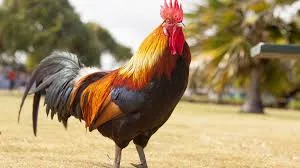
The Polk County Commission had wanted to restrict roosters ― known for crowing at 5 a.m. every morning and waking up neighbors, specifically in residential areas. But a new state law forbids local governments from passing ordinances restricting what property owners can do with their land.
So, a less-restrictive measure allowing chicken coops within 10 feet of the property lines in unincorporated residential neighborhoods was approved July 15 by the Polk commissioners. The previous limit was 50 feet.
How a state law preempted the county
Because the new rules are less restrictive, Florida’s Senate Bill 180 does not restrict this land use change by the commissioners.
While the county had proposed months ago to ban roosters on lots smaller than a half acre, officials decided in May to put the proposal on hold to see whether Gov. Ron DeSantis would sign SB 180. He did so on June 26.
The bill is similar to one DeSantis signed into law a couple of years ago. It prohibits city and county governments within 100 miles of a hurricane that spurred a federal disaster declaration from adopting moratoriums on construction, reconstruction, or redevelopment of hurricane-damaged property. And they cannot propose or adopt more restrictive comprehensive plans or land development regulations, or more burdensome procedures for reviewing or issuing permits.
It is retroactive to Aug. 1, 2024, for areas impacted by Hurricanes Debby, Helene, and Milton.
All of the legislators with districts within Polk County voted in favor of SB 180. It was supported by major builders and is aimed at expediting post-disaster reconstruction, but raises concerns about development in vulnerable locations, such as Polk County’s subdivisions in closed basins.
That was the case with one of the other changes the commission wanted to make.
Earlier this year, the county’s Land Development Division had proposed changes to closed basins to address extended flooding in subdivisions impacted by Hurricane Milton, which dropped rain of up to 12 inches of rain as it passed over Polk County.
The other change the county wanted was to increase the area in which public-notice letters must be delivered to property owners. Currently, property owners within 500 feet of land use changes, such as a new housing development, must be notified of public hearings. The county wanted to increase that to 1,000 feet.
But these changes remain in limbo.
How does Polk compare on roosters?
According to a county Land Development Division staff report recommending the change, six cities in Polk County and a dozen other counties were surveyed for their land use regulations regarding roosters, fowl, and other animals in residential neighborhoods.
Several jurisdictions have already permitted chicken coops and livestock, the report said. Still, all counties and cities surveyed have restricted roosters, or the property owner must gain a variance for the noisy fowl to roam the lot.
Here is a summary of the staff’s findings:
- Four out of 12 counties do not permit chickens in residential districts without a public hearing process.
- Three of the six cities in Polk County prohibit chickens.
- Roosters are prohibited in residential districts or zones for all 12 counties and all six Polk cities.
- Hens are typically permitted at a range of 4 to 6 of the birds in residential areas with restrictions (Bartow was an outlier at 12).
- Setbacks for penned hens range from 10 to 50 feet from property lines and 25 to 50 feet from off-site residences.
- Minimum lot sizes range from none to 1 acre.
- Three counties required opaque fences.
Why allow chicken coops?
The rationale for the change in setbacks for chicken coops in Polk was also stated in the staff report. It said, “The (Land Development Code) has made multiple attempts to balance responsible animal husbandry with the quality of life within residential neighborhoods.
“What has resulted is a complex set of standards that has left citizens and staff unhappy with the results,” the report said.
The original requirement that structures for feeding and sheltering animals remain 50 feet from property lines had created “physical burdens for placing coops and stables on certain lots, and while a variance process was implemented to address this in January 2024, 50 feet has been deemed to be too restrictive.”
With the commission’s approval, the setback for coops is now 10 feet from property lines in residential neighborhoods. Further, code enforcement complaints regarding these animal structures can only be made by a residential property owner within 250 feet of the site.
There is an exemption for show animals and educational projects intended to be kept on-site temporarily.
The changes do not apply to land on small ranches of five acres or more, phosphate mining land, and land within the Green Swamp district. Nor do the changes apply to properties with agricultural exemptions.
“Ultimately, the goal is to allow livestock and fowl while creating some reasonable limitations to protect residential areas,” the staff report said.
Regarding swine, they will still need to stay a minimum of 50 feet from neighboring property lines. And storage of animal waste also must be located 50 feet or more from property lines.
The staff analysis said the new 10-foot setback will affect neighbors who live next to people who own chickens, bringing these structures closer to property lines.
“Chicken coops are not benign structures like utility sheds,” the report said. “With them comes noise and smells. However, these setbacks are still more than what would be applied to detached accessory structures in most residential land use districts.
“It is also worth noting here that these rules do not pre-empt deed restrictions or the covenants of an HOA, some of which prohibit keeping fowl and livestock within residential subdivisions,” the report said.
The (old) rules are there for a reason. This will backfire.
And, yet, nothing about ALL of the citizens who appealed to the BoCC to amend the animal ordinance in Polk County to embrace evidence-based, humane, and effective management of community cats. WTF? Are they SO afraid of Grady that they won’t do the right thing? Unbelievable!