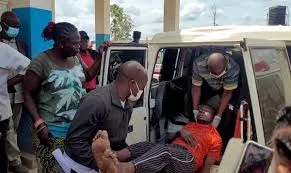
Over the weekend, the World Health Organization (WHO) officially declared the Ebola outbreak in the Democratic Republic of Congo (DRC) and Uganda a Public Health Emergency of International Concern (PHEIC).
What makes this particular outbreak especially concerning to health officials is the specific strain involved and how far it has already traveled undetected.
Why Health Officials are Highly Concerned
- The Bundibugyo Strain: This outbreak is driven by the rare Bundibugyo strain of the ebolavirus. Unlike the more common Zaire strain, there is currently no approved vaccine or specific antiviral treatment available for Bundibugyo. Historically, it carries a mortality rate between 25% and 50%. +1
- Surveillance Gaps & Rapid Spread: Epidemiologists believe the virus may have been circulating undetected since late April. Because local diagnostic equipment in the DRC’s Ituri Province was only calibrated to detect the Zaire strain, initial tests came back negative, allowing the virus to spread before the Bundibugyo strain was officially identified in mid-May.
- Urban and Cross-Border Reach: The virus has already moved from rural mining hubs into major population and transit centers. Confirmed cases have been reported in the DRC’s capital of Kinshasa, as well as Kampala, the capital of neighboring Uganda. +1
The U.S. Response and Current Risk
The U.S. Centers for Disease Control and Prevention (CDC) has mobilized response efforts, though they emphasize that the immediate risk to the American public remains low.
- In-Country Deployment: The CDC is deploying additional personnel to the DRC and Uganda to assist with contact tracing, laboratory testing, border health monitoring, and infection control.
- Travel Advisories: The U.S. government has issued a Level 2 Travel Health Notice for the DRC, advising travelers to practice enhanced precautions. Additionally, the State Department has warned Americans against traveling to Ituri Province, the epicenter of the outbreak.
- Monitoring Potential Exposures: U.S. officials are currently tracking and supporting the safe withdrawal of a small number of Americans in the region who may have been exposed to the virus.
While the WHO has explicitly stated that this should not be looked at as a pandemic-level emergency like COVID-19—and has advised against closing international borders—the lack of an existing vaccine means containment at the source is the global health community’s absolute top priority right now.