The paradox of the “Free State of Florida” is one of the most fiercely debated topics in American politics today. The friction you’re pointing out comes down to a fundamental disagreement over what “freedom” actually means and who it is meant to protect.
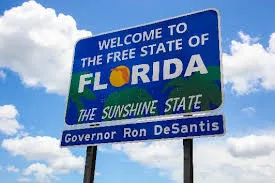
The political landscape splits cleanly into two contrasting philosophies on this:
The Argument for the “Free State” (Economic and Structural Freedom)
Proponents of Florida’s governing style argue that freedom is defined by minimal government intervention in business, low taxes, and individual autonomy from federal or corporate mandates. From this perspective, Florida is considered free because of:
- Economic Liberty: There is no state income tax, regulatory burdens on businesses are kept low, and the state fiercely protects private property rights.
- Freedom from Mandates: The “Free State” branding largely solidified during the COVID-19 pandemic, when leadership resisted lockdowns, school closures, and vaccine/mask mandates, emphasizing an individual’s right to choose their own health risks.
- Parental Rights: Supporters argue that restrictions on school curricula or library books are not “bans” but rather measures that return freedom and authority to parents, allowing them to dictate what their children are exposed to rather than leaving it to school systems.
- Second Amendment Rights: The expansion of firearm freedoms, such as the passage of permitless concealed carry, is viewed as a direct expansion of constitutional liberty.
The Argument Against (Personal and Civil Infringements)
Critics argue that the state’s definition of freedom is highly selective and that recent legislation constitutes a historic overreach of government control into the private lives of its citizens. They point to several key areas:
- Speech and Education: Laws that restrict how race, gender, and history can be taught in universities and K-12 public schools (as well as policies making it easier to challenge and remove books from libraries) are viewed as direct infringements on free speech and academic freedom.
- Healthcare and Bodily Autonomy: Strict limitations on reproductive rights, including abortion restrictions, and bans on gender-affirming care for minors are cited as major contractions of personal freedom and privacy.
- Social and Corporate Autonomy: Critics point to state interventions in private business policies (such as restricting companies from implementing certain DEI initiatives or punishing corporations like Disney for expressing political stances) as a contradiction of free-market principles.
- Daily Life and Safety Net Controls: Recent measures, such as tightening restrictions on what SNAP recipients can buy or banning local municipalities from passing heat protections for outdoor workers, are viewed by opponents as micromanagement that targets vulnerable populations.
The Core Conflict
Ultimately, the debate hinges on a clash between negative liberty (freedom from government interference, which supporters claim to champion economically) and positive liberty (the freedom to live, speak, and make personal choices without state retribution, which critics argue is being stripped away).
Depending on which of these freedoms an individual prioritizes, Florida can look like either a beacon of liberty or a cautionary tale of state overreach.