The U.S. Air Force just officially unveiled an ambitious new proposal called Project Able Baker to do exactly that.
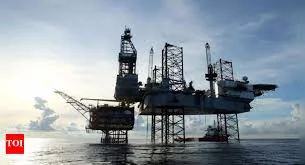
Managed via the Air Force Research Laboratory (AFRL) with an initial $480 million budget approved by Congress, the program explores converting decommissioned offshore oil platforms into Sea-Based Recovery Stations. These hubs will serve the U.S. Space Force and commercial space flight operators like SpaceX, Blue Origin, and Rocket Lab.
The initiative aims to solve two major bottlenecks at once: handling the soaring cadence of heavy-lift rocket launches and managing the environmental liabilities of aging maritime infrastructure.
Why the Military is Pivoting to Oil Rigs
The Air Force and Space Force are facing a massive surge in orbital launches, and land-based coastal sites are reaching their limits. Repurposing old oil rigs presents several massive advantages:
- Cutting Costs: It provides a permanent, stable alternative to using expensive, custom-built drone ships (like SpaceX’s current recovery model).
- Mitigating Sonic Booms: Landing rockets further out at sea moves the acoustic shockwaves away from coastal populations, allowing for a much higher frequency of launches without disturbing civilian areas.
- Solving an Environmental Liability: There are over 1,800 decommissioned platforms in the Gulf of Mexico alone that cost billions to safely dismantle. Repurposing them aligns with the federal “Rigs-to-Reefs” philosophy, modifying the decks for space operations while letting the underwater structures continue supporting marine ecosystems.
The Engineering Hurdles
Converting a platform built for drilling into one built for rockets isn’t a simple paint job. Rockets exert massive amounts of thermal energy and stress. The solicitation outlines strict technical requirements for Phase 1:
- Structural Reinforcement: Decks must be retrofitted with modular kits to survive the heavy point-loads, extreme vibrations, and intense exhaust plumes of boosters like SpaceX’s Falcon 9, ULA’s Vulcan, or Blue Origin’s New Glenn.
- Thermal Control: Implementation of active and passive flame deflection systems alongside remote, high-capacity fire suppression.
- Logistics & Transport: Integration of precise autonomous landing guidance systems, and cranes or vertical-takeoff systems capable of shifting a recovered booster from the rig onto a transport barge to go back to shore.
What Happens Next?
The program is starting with a phased roll-out looking at a group of pilot platforms in the Gulf of Mexico (covering waters near Texas, Louisiana, and Florida) by 2027.
Phase 1 is currently underway, requiring engineering firms to submit economic and technical feasibility roadmaps, clear environmental impact assessments, and identify at least three ideal candidate rigs. Phase 2 will move to physical testing, using inert-mass drops and static-fire simulations on a modified deck section to see how well the materials actually hold up.