The fish kill at Lake Hollingsworth was caused by a completely natural “perfect storm” of environmental factors rather than pollution, chemical dumping, or mosquito spraying.
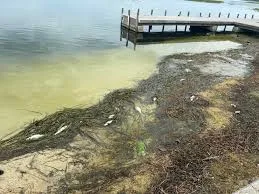
State biological scientists from the Florida Fish and Wildlife Conservation Commission (FWC) and Lakeland’s Lakes and Stormwater Division analyzed water samples and confirmed that the event exclusively targeted gizzard shad—a hyper-sensitive baitfish—due to a combination of three sudden stressors:
1. Rapidly Plummeting Oxygen Levels
Water tests revealed a high abundance of filamentous cyanobacteria (a type of blue-green algae). While it wasn’t a toxic bloom crisis, a high concentration of this algae naturally consumes massive amounts of oxygen overnight. This caused the lake’s dissolved oxygen levels to drop right before dawn, leaving the fish gasping.
2. An Intense Temperature Spike
Lakeland rapidly shifted from mild 75°F to 80°F days straight into the mid-90s. Because Lake Hollingsworth is remarkably shallow—averaging only about 4 feet deep—the water column heated up almost instantly. Gizzard shad are incredibly fragile and can experience fatal systemic shock from water temperature shifts of 5°F or more.
3. Spawning Exhaustion
The timing of the weather shift hit at the worst possible moment. The shad were in the middle of their peak spawning season, a period where they crowd into the shallowest waters and expend immense energy releasing eggs. Already physically exhausted and weakened from spawning, their bodies simply couldn’t handle the sudden heat and low oxygen.
Why it’s not an ecosystem crisis: FWC officials emphasized that this was a relatively minor, localized event involving only a few hundred fish. The fact that hardier local species like largemouth bass, bluegill, and crappie were completely unaffected is proof that the lake’s overall ecosystem remains healthy. Similar natural shad die-offs were tracked in nearby shallow waters like Lake Bonny during the same week.