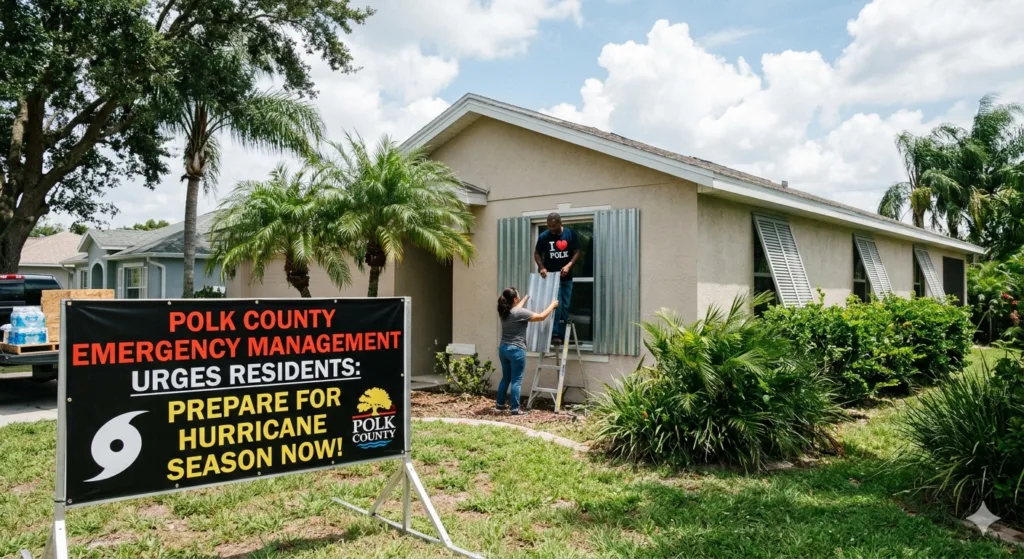
With the official start of the 2026 Atlantic hurricane season on June 1, Polk County Emergency Management Director Paul Womble is urging all residents to take proactive steps now before a storm threatens the area.
While NOAA’s initial forecasts predict a slightly below-average season this year (estimating 8 to 14 named storms and 3 to 6 hurricanes), local officials stress that it only takes one storm hitting our area to disrupt daily life.
Emergency management officials recommend focusing on five key areas to ensure your household is ready:
- Build a 7-Day Supply Kit: Prepare to be self-sufficient for at least a week. Your kit should include one gallon of water per person per day, non-perishable food (and a manual can opener), flashlights, extra batteries, and a week’s supply of medications. Don’t forget supplies for your pets.
- Create a Communications Plan: Establish how your family will get in touch if you are separated, and designate a single out-of-town relative as a point of contact. Keep a hard-copy list of emergency phone numbers in case cell networks or power grids go down.
- Secure Your Property: Review your home and renters insurance policies now, and store critical documents in a waterproof container or secure digital backup. Spend some time trimming low-hanging tree branches and overgrown vegetation around your house.
- Plan for Special Needs: If you or a loved one requires electricity for medical equipment or oxygen, you should pre-register with the Florida Special Needs Registry as soon as possible to secure appropriate assistance or shelter space.
- Know Your Shelter Options: Polk County features 48 designated public shelters (including 17 right here in the Lakeland area). While staying home or with a local friend is always preferred if safe, the county operates three pet-friendly shelters and three special-needs shelters that activate as needed during a crisis.
Stay Connected
The most effective tool during severe weather is accurate information. You can sign up for free, localized emergency alerts directly through Alert Polk. Local emergency management updates will also be broadcast on local radio stations (WONN 1230 AM and WPCV 97.5 FM) and posted on the county’s social media channels (@polkemergency on X and Polk County Emergency Management on Facebook)
When assembling a 7-day emergency kit, the goal is to think about self-sufficiency. If a major storm hits, utilities could be down for days, and roads might be temporarily impassable.
Official checklists from organizations like the Florida Division of Emergency Management (FDEM) break down supplies into specific, manageable categories for your household and your animals.
1. Household Core Supplies
The basics of your kit ensure your family has hydration, nutrition, and light if power grids go down.
- Water: 1 gallon per person, per day, for 7 days (primarily for drinking and basic sanitation).
- Food: A 7-day supply of non-perishable, shelf-stable items (canned meats, fruits, vegetables, protein bars, and cereal).
- Manual Can Opener: A critical but frequently forgotten item.
- Lighting & Power: Flashlights, a battery-operated or hand-crank NOAA Weather Radio, and several packs of extra batteries. Avoid candles due to fire hazards.
- Cash: Keep small bills on hand, as local ATMs and credit card machines will not work if the power or internet is out.
- First Aid Kit: Bandages, sterile gauze, antiseptic wipes, tweezers, scissors, a thermometer, and basic over-the-counter pain relievers or antacids.
2. Important Documents & Personal Items
Keep these items sealed in a waterproof, portable container or a heavy-duty zip-top bag so you can grab them instantly if you need to evacuate.
- Medications: A minimum 7-to-14-day supply of all prescription medical supplies and a written list of dosages.
- Documents: Hard copies of insurance cards (home, auto, health), medical records, banking information, IDs/birth certificates, and emergency contact phone numbers.
- Sanitation: Moist towelettes, heavy-duty garbage bags, plastic ties, toilet paper, and hand sanitizer.
- Device Chargers: Fully charged portable power banks for your cell phones.
3. Pet Emergency Kit
Your animals depend entirely on you to pack their essentials. Just like humans, they require their own dedicated stash of supplies.
- Food and Water: A 7-day supply of dry or wet pet food stored in an airtight container, plus extra water allocated specifically for them.
- Travel Gear: A sturdy pet carrier or crate (labeled with your contact details), a secure collar or harness, and a leash.
- Identification & Records: Printed copies of their vaccination history, rabies certificate, microchip registration details, and a recent photo of you with your pet (to prove ownership if separated).
- Waste Management: For dogs, plenty of poop bags. For cats, a portable litter box, a small scoop, and a supply of litter.
- Comfort Items: A favorite toy, blanket, or towel to help lower their anxiety levels in a stressful situation or shelter environment.
Pro Tip: Don’t forget simple comfort items like books, board games, or deck of cards. Keeping your mind occupied during long hours without power makes a massive difference in managing stress.