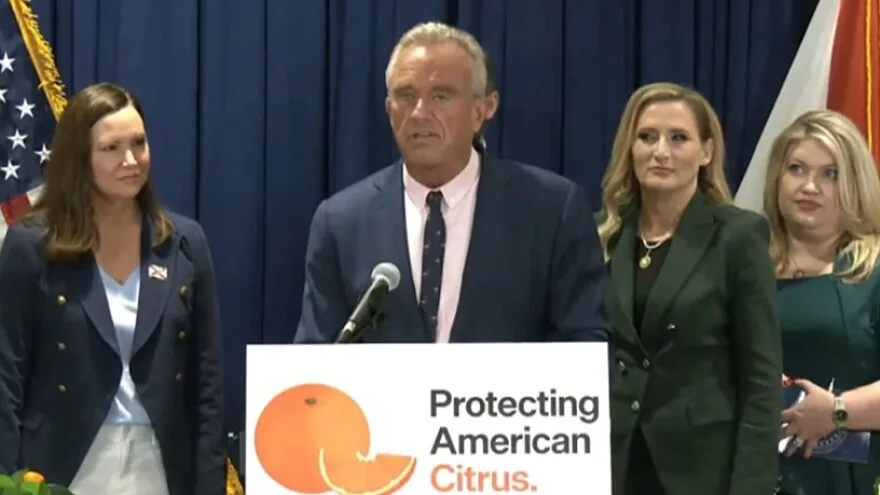
U.S. Department of Health and Human Services (HHS) Secretary Robert F. Kennedy Jr. spoke at Bonnet Springs Park in Lakeland, Florida, to announce a long-sought regulatory change for the American citrus industry: an update to the FDA’s 1963 Standard of Identity (SOI) for pasteurized orange juice.
The federal rule change directly impacts Florida growers who have struggled for years against citrus greening disease and severe weather patterns.
Key Takeaways from the Announcement
- Lowering the “Brix” Floor: The FDA issued a final rule reducing the minimum Brix level—the measure of natural dissolved sugar content and soluble solids—from 10.5° down to 10.0°.
- Increased Mandarin/Tangerine Blending: Processors are now permitted to include up to 15% Citrus reticulata (mandarin/tangerine) or hybrid juice by volume (up from the previous 10% limit).
- Slashing Foreign Dependency: Because bacterial greening naturally lowers sugar levels in domestic oranges, U.S. juice processors previously had to import high-sugar fruit (primarily from Brazil) simply to meet the arbitrary 10.5° benchmark.
- Economic Impact: Federal officials estimate the update will save domestic producers upwards of $50 to $60 million annually in operational and importing costs.
Why Florida Citrus Leaders Are Celebrating
Decades of bacterial infection (Huanglongbing / citrus greening) have devastated Florida’s historic orange groves, making it increasingly difficult for growers to consistently hit the rigid 1963 sugar standard without sacrificing domestic fruit.
Florida agricultural groups (including Florida Citrus Mutual and the Florida Citrus Processors Association) petitioned the FDA for this shift. Local lawmakers who pushed for the Defending Domestic Orange Juice Production Act joined Secretary Kennedy, Acting FDA Commissioner Kyle Diamantas, and state agricultural representatives on stage to welcome the rule, which takes effect in August