By Douglas Vandergraph https://douglasvandergraph.com
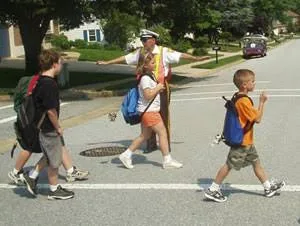
A school crossing is a small place where adults make a very large promise. A child steps toward traffic trusting that someone has already thought about the danger, watched the cars, and made room for a safe journey. That promise is easy to overlook until an ordinary morning needs a substitute.
On November 13, the Lakeland Gazette reported that the Polk County Sheriff’s Office is recruiting substitute school crossing guards for school zones around Lakeland. Several existing substitutes have moved into permanent part-time posts, leaving openings on the backup roster. The report describes a program with 58 part-time guards and 11 substitutes, supported by county funding. It is local news about staffing. It is also a question about the kind of responsibility adults accept for children who cannot protect themselves alone.
A crossing guard is not decoration beside an intersection. The job requires attention, training, judgment, and the willingness to be present when a school day begins and ends. The substitute role can be especially difficult to fill because the hours arrive in pieces: roughly an hour in the morning and half an hour in the afternoon when called. That arrangement may suit some people. For others, travel, work, caregiving, or physical limitations make it impractical. A serious community does not mistake those constraints for a lack of concern.
We often tell children to be careful. We teach them to stop, look, and wait. Those are good lessons, but they cannot carry the whole burden. Streets are designed by adults. Driving habits belong to adults. Staffing decisions, training standards, and the reliability of a backup system also belong to adults. When a young child must cross a busy road, the question should never be only whether that child remembered every instruction. It should also be whether we kept our part of the agreement.
This distinction matters because responsibility can quietly slide downhill toward the person with the least power. If an intersection feels unsafe, we may urge children to pay better attention. If a shift is difficult to cover, we may praise the generosity of whoever volunteers at the last minute. But an adequate system does not depend on a child being unusually brave or on one exhausted adult always finding a way to say yes. It makes safety something we plan for before a problem appears.
There is a passage in Mark 10 that has stayed with me. People brought children to Jesus, and His disciples tried to turn them away. Jesus did not treat the interruption as something beneath His attention. He welcomed the children and challenged the adults who had made them feel less important. The lesson is not a traffic policy. It is a way of seeing: children should not have to become powerful, productive, or convenient before their well-being counts.
That Christian conviction belongs alongside practical public responsibility. Parents of every faith, and of no faith, want their children to arrive at school safely. We can differ on budgets and procedures while agreeing that vulnerable people deserve more than expressions of concern. Faith becomes credible when it helps us honor that shared obligation instead of using religious language to avoid hard details.
So what would taking this Lakeland vacancy seriously look like? It begins with treating crossing guards as skilled people rather than interchangeable figures in bright clothing. Applicants need clear information about certification, scheduling, expectations, and the realities of reaching assigned posts. Those considering the role should be welcomed honestly, not pressured by appeals to guilt. The Sheriff’s Office has outlined training and screening requirements; those safeguards matter precisely because good intentions are not a substitute for readiness.
Drivers have obligations, too. They can put away the phone, allow extra time around school zones, and follow instructions from trained guards without impatience. Parents can discuss safe routes with their children and ask appropriate questions when a crossing arrangement changes. Employers and community groups can help qualified people learn about these openings, while recognizing that someone’s ability to accept a split shift will depend on real circumstances. Concern becomes useful when it is directed toward actions people can actually take.
And public officials should be able to hear respectful questions about continuity. What happens when a regular guard cannot be there? How is a substitute contacted? Are recurring staffing difficulties being tracked? Those are not accusations. They are the ordinary questions that turn a reassuring program into a dependable one. Good public service welcomes them because safety is strengthened by clear answers.
The strongest communities are not the ones that promise nothing will ever go wrong. They are the ones that prepare carefully, tell the truth when something needs attention, and refuse to place the cost of adult inattention on children. Lakeland’s crossing-guard vacancies are not the whole story of its schools or streets. They are a timely opportunity to remember who is waiting at the curb.
When that child takes the first step, the most important thing we can offer is not applause for courage. It is evidence that the grown-ups were ready.
Douglas Vandergraph is a Christian writer and teacher who writes about faith, human dignity, and everyday community life.
Source notes (for editorial fact-checking):
Lakeland Gazette, “Polk County Sheriff’s Office Seeks Substitute School Crossing Guards in Lakeland,” November 13, 2026. https://lakelandgazette.info/news/2026/11/13/polk-county-sheriffs-office-seeks-substitute-school-crossing-guards-in-lakeland
Gospel of Mark 10:13–16 (children welcomed by Jesus).