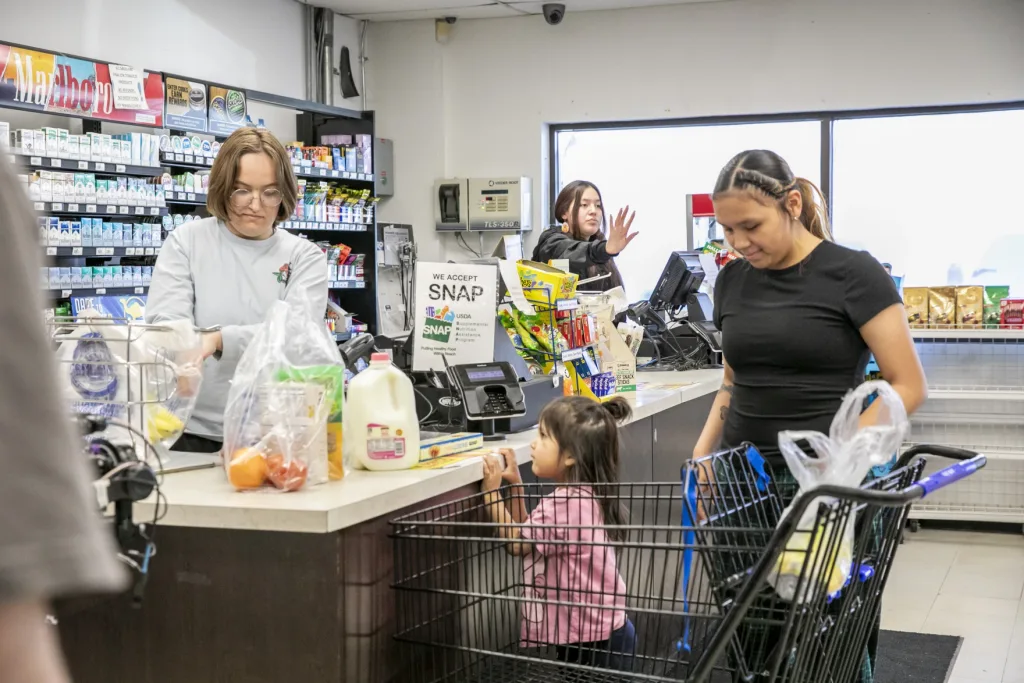
A woman and a young girl check out at a store that accepts SNAP. In Florida, more than 62% of people on food assistance are in families with children, according to data from the Center on Budget and Policy Priorities.
Florida is facing an estimated $984 million annual federal penalty for high payment error rates in its Supplemental Nutrition Assistance Program (SNAP), triggered by rules passed under the 2025 federal budget reconciliation law (H.R. 1). As more than 2.6 million Floridians rely on SNAP—over 62% of whom live in families with children—the looming cost threatens to strain state food assistance programs and local food banks during the holiday season.
Why Florida Faces the Penalty
- The Error Rate Threshold: Under H.R. 1, states with a SNAP payment error rate of 10% or higher are required for the first time to pay 15% of their own SNAP grocery benefit costs rather than having the federal government cover 100%.
- Florida’s Numbers: Federal USDA data released in June 2026 put Florida’s SNAP error rate at 12.97%—more than double the 6% federal tolerance threshold. These errors reflect administrative overpayments and underpayments caused by agency or applicant mistakes, not fraud.
- Root Causes: Policy analysts and researchers point to chronic understaffing, high caseworker turnover, outdated computer systems, and repeated surges in emergency disaster SNAP applications following back-to-back hurricanes.
Impact on Floridians and the State Budget
- Rising Budget Pressures: On top of the nearly $1 billion penalty for grocery benefits, H.R. 1 shifts SNAP administrative cost-sharing from a 50/50 split to requiring states to pay 75%, adding roughly $205 million in annual administrative costs for Florida.
- Immediate Squeeze on Families: While the state scrambles to lower its error rate before the grocery benefit penalties take full financial effect, families are already feeling the pinch. Processing bottlenecks and premature case closures have left eligible residents waiting months without food aid. Simultaneously, the expiration of federal reimbursement programs for EBT card skimming has left theft victims without replacement funds for stolen holiday grocery money.
- Potential Cuts Ahead: If Florida cannot bring its error rate below 10%, state lawmakers will face tough choices between cutting other state programs, absorbing the $1 billion hit in the state budget, or tightening SNAP eligibility and reducing aid.
(Visited 17 times, 1 visits today)
Dang, Ron – how could you let this escape your attention? You’re fired.