A solemn Texas deed was ignored for profit.
The situation in Taylor, Texas, highlights the growing tension between local municipalities looking to cash in on the AI and data center boom and the communities trying to preserve their history and green spaces.
What looks like a massive financial win for the city government is actually a complex, multi-decade legal and ethical battleground for the local residents.
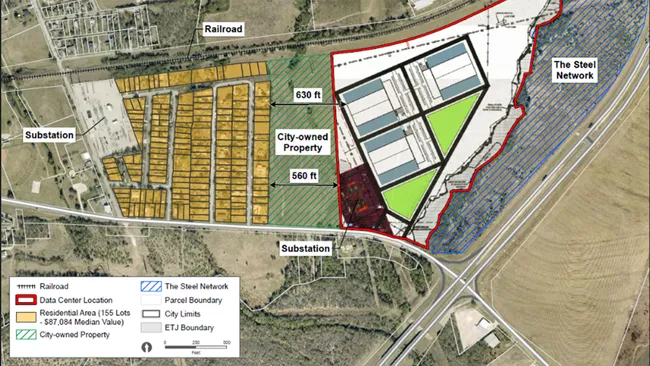
The Paper Trail: From $10 to $10 Million
The story unfolded through a sequence of property handoffs that locals argue was essentially a bureaucratic shell game designed to strip away the original intent of the donation:
- July 1999: A local farmer named Mr. Bland noticed neighborhood children had nowhere to play. He transferred 87 acres of farmland to the Texas Parks and Recreation Foundation for a nominal fee of $10. The deed explicitly stated the land was to be held in trust for future use as parkland.
- 2003: The property was transferred to the Williamson County Park Foundation, which then handed it over to the City of Taylor a month later.
- 2008: The City of Taylor transferred the land to the Taylor Economic Development Corporation (TEDC) for $15,000, shifting its designation away from public parkland.
- 2025: The TEDC officially flipped the land to a data center developer called Blueprint for $10 million—marking a massive financial gain from the original $10 gift.
What the City and Developers Gain
From a purely financial standpoint, local officials view the 135,000-square-foot data center campus as a massive win for the municipality:
- $10 Million upfront from the land sale.
- $30 Million in projected tax revenue over the next decade.
- $20 Million of that tax windfall is explicitly earmarked for local educational funding.
The city has maintained that its hands are legally tied because the land’s current zoning (“Employment Center”) permits data center development by right, meaning they technically cannot reject a compliant project.
Why Residents Are Fighting Back
For the local neighborhood—predominantly working-class, Black families whose homes sit just 500 feet from the site—the development feels like a massive breach of trust.
“I see the kids don’t really have nowhere to play… I’m thinking about giving this land for parkland because these kids need somewhere to play.”
— Farmer Mr. Bland, as recalled by a long-time neighbor
Ehe legal document does stipulate that the 87.97 acres of land “be held in trust for future use as parkland.
Generations of local children have used the open fields informally for sports, camping, and gatherings. Now, residents are raising serious quality-of-life concerns typical of massive tech infrastructure:
- Industrial Noise: The constant hum of massive industrial cooling systems.
- Environmental Stress: High electricity demands and heavy water usage for infrastructure cooling.
- Property Values: The looming presence of a massive industrial compound right next to residential backyards.
Current Status
After a trial court dismissed their initial lawsuit and denied an injunction to stop construction, residents teamed up with legal counsel and are currently taking their fight to Austin’s Third Court of Appeals. They argue that the 1999 deed’s original restriction to keep the land as a park should still legally stand, framing the issue as a fundamental violation of property rights and community trust.