The legal challenge against the proposed property tax constitutional amendment focuses squarely on how the question is phrased for voters, rather than the actual merits of the tax cuts.
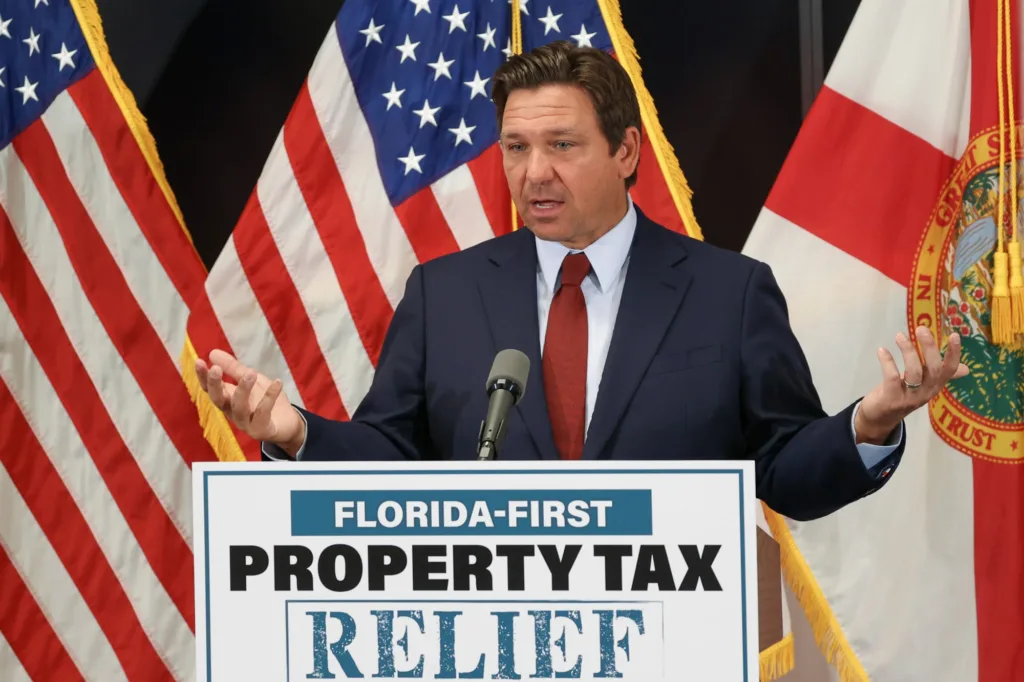
The lawsuit, filed in Leon County circuit court by a South Florida attorney and a group called “Save Our Voters From Misleading Ballot Language,” claims the ballot title and summary violate Florida law by acting as a political advertisement instead of a neutral explanation.
Why the Ballot Language is Being Challenged
Under Florida law, ballot summaries must be clear, accurate, and completely neutral. The lawsuit argues that the current text reads like a political campaign flyer.
1. Use of “Campaign Slogans”
The official title of the amendment as drafted by the Legislature is “SAVE OUR HOMES FROM EXCESSIVE PROPERTY TAXES.”
- The Objection: The lawsuit states that this is an overt partisan tagline, not an objective title. Furthermore, the summary explicitly tells voters that the amendment “benefits Florida taxpayers” and includes phrases like “protecting small businesses” and “ensuring fairness.” The plaintiffs argue the ballot’s job is to explain what a measure does, not to tell voters how to feel about it.
2. Omission of the Phased Timeline
The amendment proposes to dramatically increase the non-school homestead exemption from the current $50,000 up to $250,000, while also slashing the annual assessment cap on commercial properties from 10% to 5%.
- The Objection: The ballot summary states it will exempt the first $250,000 of a home’s value, but it completely leaves out the fact that this tax break is phased in over two years ($150,000 in 2027, reaching $250,000 in 2028).
3. Missing Nuances and Exclusions
The summary asserts that the amendment “ensures funding for core services.”
- The Objection: Critics and the lawsuit point out that the text of the amendment guarantees no specific funding levels. In fact, because it cuts local revenue with no state replacement fund, many cities and counties argue it will do the opposite—forcing them to either cut essential services or raise local millage rates to make up the difference. It also fails to mention that new residents must wait five years to qualify for the higher exemption tiers.
What Happens Next?
The attorney leading the challenge, Jamie Cole, has a track record with this exact issue. In 2007, he successfully sued the state over a similar “Super Exemption” property tax amendment, convincing a judge to throw it off the ballot because the language misled voters about existing protections.
However, a legal victory this time might not kill the measure entirely. Thanks to a relatively recent Florida law, if the court rules that the current language is unconstitutionally biased, the state Attorney General has a 10-day window to rewrite the summary into a neutral format so it can still appear on the November ballot.
For the amendment to become part of the Florida Constitution, it will still need to survive this court challenge and secure at least 60% voter approval in November.
Property tax should be eliminated 100%. Otherwise you’re renting from the GOVERNMENT for your entire life.