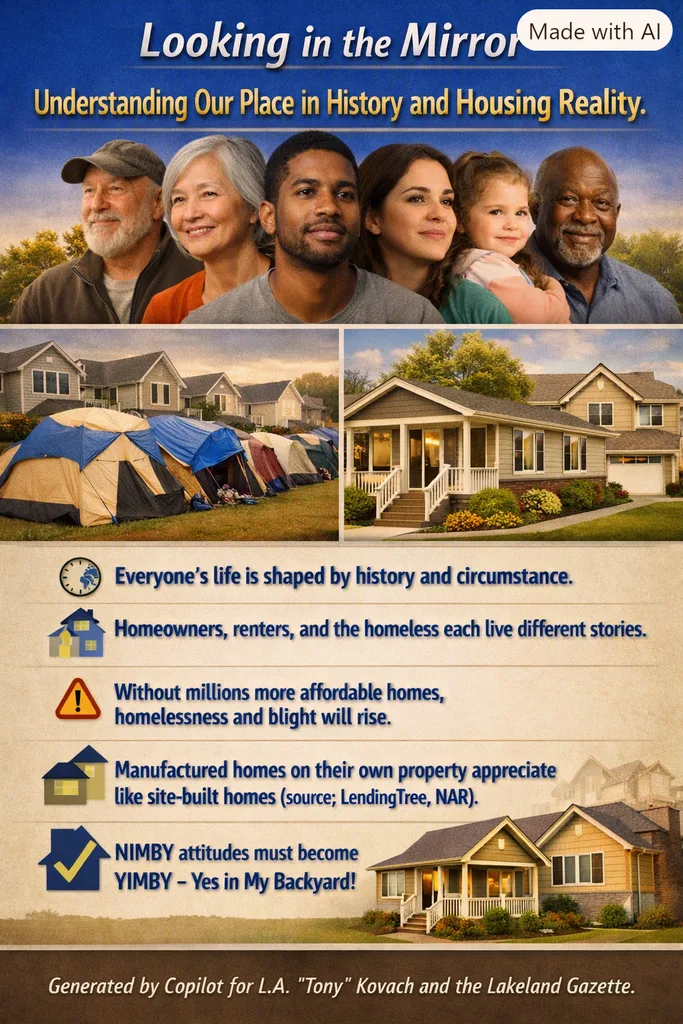
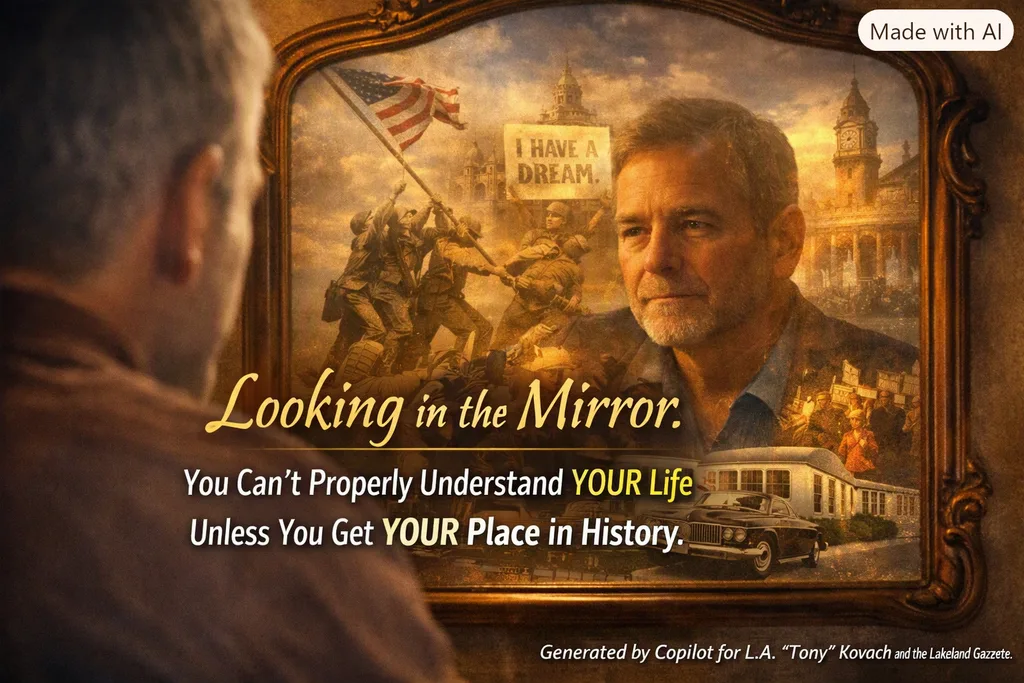
Everyone has a personal history. Millions of Americans’ eyes glaze over when they hear the word ‘history.’ Maybe you or someone you know hated history classes in school. You can’t begin to understand your life without having some sense of how YOUR personal history intersects with the times you have or are living in. “Neither the life of an individual nor the history of a society can be understood without understanding both.” — C. Wright Mills.
It is obvious that the experiences of a Vietnam, Iraq, or Afghan war veteran are different from those of a person who never left the U.S.
The man or woman who went to public school has a different experience than those who went to a parochial, Christian, or other private school.
The person who grew up before social media came on the scene has a significantly different life experience than the ones who were born in the 21st century.
To paraphrase C. Wright Mills, you can’t understand your life without looking in the mirror and pondering your life within the broader context of the place, time, circumstances and public policy dynamics you have lived in.
Experience is whatever it is. You can’t change what you experienced.

My immigrant mother used to cite the Native American attributed maxim: ‘Don’t judge someone until you have walked a mile in their moccasins.’
Odds are about 2 in 3 that you as an American reader are a homeowner or are living with a homeowner. If you’ve owned a home for more than 10 years your experience is significantly different from the adult who has always rented. Let’s consider those perspectives, starting with homeowners then those renting or homeless.
Homeowners often want to protect their home’s value. That’s natural. Sometimes owners oppose new developments (NIMBY-Not in My Back Yard) because they think developing new apartments or whatever is proposed will hurt their property value.
In one survey, 86 percent of renters said they wanted to be homeowners someday. “But of those surveyed, at least 54% believe they’re unlikely to ever own a home.” Rising rents and housing costs create a variety of stress points for renters who want their part of the ‘American Dream.’
The homeless are often misunderstood and shunned. Many start out homeless not because of addiction, but because of a combination of some economic shock (divorce, health, loss of a job, etc.) and housing that is priced out of their reach. “As many as 40%-60% of people experiencing homelessness have a job, but housing is unaffordable because wages have not kept up with rising rents,” per federal data here.
We as a society can’t fix homelessness or unaffordable housing without building more new homes. It’s an economic impossibility.
Imagine the homeowner who doesn’t want tents or cardboard boxes or vehicles ‘housing’ the homeless on their street or in their neighborhood.
Here’s the deal. Without an estimated 7 to 10 million more affordable homes, the odds of owners facing the blight, health, safety and other costs of homelessness rises. That’s reality.
Properly sited modern manufactured homes can look much like conventional houses. Dating back to at least 2011, an Obama-Biden era (D) HUD study showed manufactured homes and conventional houses appreciate side by side even in urban areas. HUD Secretary Ben Carson (R) similarly pointed out that manufactured homes are appreciating at a similar pace as conventional housing.
Those who have their piece of the American Dream of home ownership should not deny that opportunity for others. If you and society broadly do, the odds that you will share streets with the homeless rises. How does homelessness help homeowners values?
That is not mere conjecture or opinion. It’s the reality of years of research and experience.
If you want to have a more prosperous country and local area, support more construction including more manufactured homes. NIMBYs should become prudent YIMBYs, Yes in my back yard. Don’t shun history. Learn enough history to see how the experiences of the past brought us to this present moment in time. See prior articles in this series here, here and here. ##
L.A. “Tony” Kovach is a HousingWire contributor and has contributed to: Tampa Free Press, The Hill, Patch, Manufactured Home Merchandiser Magazine, and others plus is the co-founder of MHProNews and MHLivingNews. Kovach began working in manufactured housing in the early 1980s, has provided live and virtual remarks during federal listening sessions, and has been writing about manufactured home and affordable housing-related issues for over 30 years.