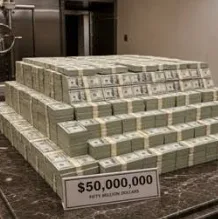
The Republican National Committee is transferring more than $50 million to its House and Senate campaign arms in the final stretch of the midterm elections, a cash infusion larger than transfers in recent cycles that party leaders say is designed to give GOP candidates a financial edge in battleground races.
Through early October, the RNC had sent $44 million to the National Republican Congressional Committee and the National Republican Senatorial Committee, with $22.3 million going to the NRCC and $21.6 million to the NRSC, according to a statement from RNC Chairman Joe Gruters and reporting by The New York Times. At least $6 million more is expected before Election Day, the committee said. Many of the transfers are being disclosed for the first time in campaign-finance filings this week.
The move builds on the RNC’s substantial cash reserves. The committee entered September with $126 million on hand, described by the party as the largest in its history, after aggressive fundraising led by President Donald Trump and Vice President JD Vance, who serves as the RNC’s finance chair. It raised $18.5 million in September. By Oct. 14, cash on hand had fallen to $76 million, officials told The Times, reflecting the transfers and other spending.
“Under the leadership of President Trump and our Finance Chair Vice President Vance, the RNC built the largest cash on hand in party history,” Gruters said in the statement. “We’re now deploying it aggressively and strategically to directly benefit our candidates when and where it has the highest impact, giving Republicans the hard dollar edge in key battleground races across the country. Republicans remain united in stopping extremist Democrats from taking control, and we’re well on our way to defying midterm history.”
The transfers far exceed those in the previous four election cycles, when the RNC sent between roughly $8 million and $31 million to the congressional committees, according to The Times. They come on top of other RNC outlays, including about $56 million on canvassing and turnout operations, $27 million on election integrity efforts, $18 million on data operations and $11 million on digital work through early October.
The spending is amplified by a June Supreme Court ruling that struck down longstanding federal limits on coordinated expenditures between party committees and candidates. In a 6-3 decision, the court held that the caps violated the First Amendment. Justice Brett Kavanaugh, writing for the majority, said the ruling would allow parties to “participate more freely and compete more fully in the political process, and to coordinate more closely with their candidates.” The case was brought by the NRSC and others, including Vance when he was a senator.
Republicans have used the flexibility to pour money into advertising coordinated with candidates, particularly in Senate races. The House and Senate GOP committees have aired or booked about $152 million in such ads, compared with roughly $102 million by Democratic counterparts, according to AdImpact data cited by The Times. The largest coordinated buys have supported candidates including Sen. Jon Husted in Ohio.
The infusion arrives as Republicans defend majorities in both chambers amid a challenging political environment. The party in power has historically lost seats in midterms, and some GOP-held seats once viewed as safe have drawn Democratic challenges. Party officials have described the transfers as intended to direct additional resources to competitive races.
The Democratic National Committee, by contrast, has faced financial strain, with reports of negative cash on hand inclusive of debt for much of the cycle and an inability to make planned transfers to its congressional committees earlier in the year.
RNC officials have said not all remaining cash will be spent before Election Day, as some funds are restricted to legal, building or other non-campaign purposes. Chief of Staff Mike Ambrosini told The Times there is “no saving money for a rainy day” for deployable funds and that the coordinated approach was pitched to donors as a way for contributions to support multiple campaign uses.