Who influences what Americans see, hear, believe, and ultimately support? It is a question worth asking regardless of political party, personal ideology, or economic standing.
Consider some of the world’s wealthiest and most influential figures: Warren Buffett, William “Bill” Gates III, George and Alex Soros, Rupert and Lachlan Murdoch, Jeff Bezos, Michael Bloomberg, Mark Zuckerberg and Elon Musk. They represent different business interests. But they have often shared similar philosophies and sometimes shifting political interests. Yet each illustrates how concentrated wealth can intersect with media ownership, technology, philanthropy, political spending, and information distribution. That in turn influences affordability through public policy, including housing, healthcare, gas, groceries and employment opportunities.
That doesn’t necessarily imply that billionaires all agree or coordinate. Forbes says there are about 1000 U.S. billionaires, and a close look at them would reveal that some support Democrats, others Republicans (GOP – Grand Old Party), some will support candidates from both major parties, while others may be more independent, or third-party oriented. That said, their respective positions create opportunities that influence our society that deserve scrutiny.
Berkshire Hathaway (BRK), associated with Buffett and now led by CEO Greg Abel and chairman Howard (Warren’s son) Buffett, has substantial investments across technology and media-related businesses. That includes Alphabet, the parent company for Google and YouTube, and The New York Times Company. Berkshire subsidiaries participate in advertising markets to the tune of billions of dollars, with Berkshire-owned Geico alone spending $1.4 billion a year in 2024. Buffett’s investments are not the same as editorial control, an important distinction, but according to the docu-drama, Shadows of Liberty, capital influence often drives editorial decisions. So, access to information infrastructure and capital are legitimate subjects for public examination.
Longtime Buffett ally Bill Gates represents another example. The Gates Foundation has funded journalism and public-information initiatives, while his technology connections extend into the expanding artificial intelligence (AI) ecosystem.
George and Alex Soros have used philanthropic networks, advocacy funding, and media-related investments to advance causes they support.
Jeff Bezos is known for Amazon, but he owns The Washington Post. Michael Bloomberg controls Bloomberg L.P., a major financial-information and news operation.
The Murdoch family has extensive influence through Fox and News Corp properties.
Mark Zuckerberg’s Meta platforms that include Facebook, Instagram, Threads, WhatsApp, and Messenger, distribute information to billions of people.
Elon Musk owns X, a major platform for political discussion and news distribution.
These are different forms of influence, not interchangeable forms of ownership or proof of wrongdoing.
The important question is whether citizens can distinguish independently verified facts from narratives shaped by institutions with substantial financial, political, or technological interests.
Documentaries such as Shadows of Liberty and The Creepy Line, both examined in MHProNews reporting, raise controversial questions about corporate media, search engines, advertising, and the relationship between information and power.
The implications extend beyond national politics. Consider America’s affordable-housing crisis.
Modern manufactured homes, built to federal HUD construction and safety standards, are a potentially important source of affordable housing. Yet the industry remains far below its late-1990s production levels despite a growing population. Federal laws, including the Manufactured Housing Improvement Act of 2000, contain enhanced federal preemption provisions intended to overcome certain local barriers. Duty to Serve provisions were also intended to improve financing access, including for manufactured-home loans.
Having laws on the books, however, is not the same as seeing them effectively implemented. The border and immigration laws, or housing laws are just two examples of that vexing reality.
Zoning barriers, financing limitations, regulatory decisions, and industry consolidation all deserve examination. When affordable housing alternatives receive inadequate attention, consumers, independent businesses, and communities can pay the price.
This is not simply a Republican or Democratic issue. Administrations change. Congressional majorities change. Governors and local officials change. Yet structural barriers can persist.
A related Lakeland Gazette examination, Consolidation and Concentrated Power Costs Americans in Housing and Beyond, explored why antitrust enforcement deserves more public attention:
Another related examination addressed property taxes, government spending, and Florida’s Amendment 3 debate:
That noted, there is a larger principle at stake. The rule of law should be applied consistently, regardless of who has money, political connections, institutional influence, or control over powerful communication channels.
Attorney Kurt Kelley expressed an important version of that principle: “Predictability in law is the key to a prosperous Republic.”
Facts, evidence, and analysis matter. An AI-generated summary, a viral social-media post, a billionaire’s statement, or a government press release should not automatically be accepted as conclusive. Each should be tested against underlying documentation and competing evidence.
Citizens should follow the money, examine the evidence, ask who benefits, and demand accountability without assuming that every unanswered question proves misconduct.
Ultimately, informed self-government requires more than choosing between competing political personalities. It requires citizens willing to examine the institutions, incentives, and information systems that influence public life.
The rule of law, transparent information, competitive markets, and accountable government are not partisan luxuries. They are essential to a functioning republic. They are also essential for affordability. As founding father Ben Franklin said, we were given a republic so long as we can keep it. ##
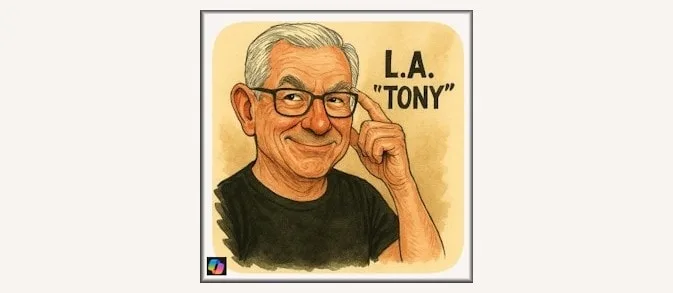
By L. A. “Tony” Kovach, publisher and co-founder of MHProNews, MHLivingNews, HousingWire contributor and previous op-eds via the Lakeland Gazette here.